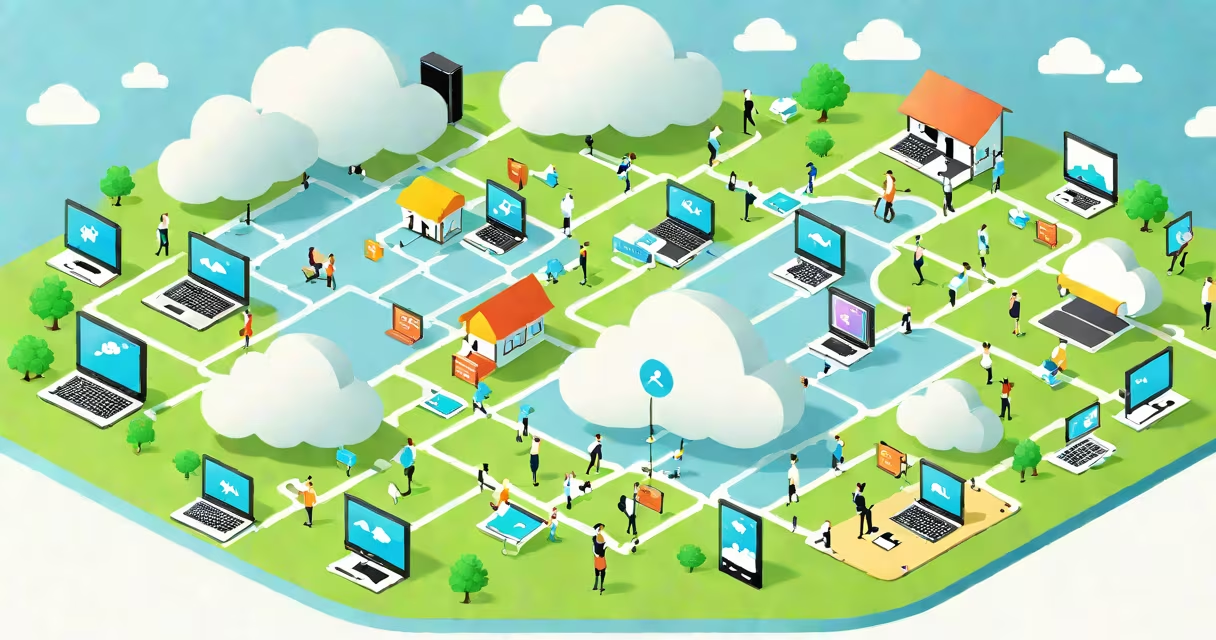
Cloud hosted software delivers applications over the internet, eliminating local installations and enabling anywhere access. Users interact with programs through web browsers rather than installing them on individual devices.
These applications run on remote servers maintained by third-party providers. When users access the software, their devices connect to these servers through the internet. The server processes all commands and returns outputs to the user's device.
For example, cloud takeoff software for construction professionals operates this way. Contractors access measurement tools through browsers, with all processing happening on remote servers.
| Type | Description | Examples |
|---|---|---|
| Software as a Service (SaaS) | Subscription-based model where software is hosted and maintained by a provider | Google Workspace, Salesforce |
| Platform as a Service (PaaS) | Provides a platform allowing customers to develop, run, and manage applications | Heroku, AWS Elastic Beanstalk |
| Infrastructure as a Service (IaaS) | Offers computing infrastructure such as virtual machines and storage | Amazon EC2, Microsoft Azure |
Many people confuse cloud hosted software with traditional software installed locally. While both may perform similar functions, their delivery mechanisms differ. Local software requires installation on each device, while cloud hosted software operates through web browsers.
Another misconception is that cloud hosted software is inherently less secure. In reality, reputable providers often implement solid security measures that exceed what most individuals or small businesses can achieve with local installations.
During the COVID-19 pandemic, many educational institutions shifted to cloud hosted learning management systems. This allowed teachers to deliver lessons remotely and students to access materials from home.
The primary advantage of cloud hosted software is accessibility. Users can access applications from any device with an internet connection, making it ideal for remote work and collaboration.
However, reliance on internet connectivity can be a challenge. Users in areas with poor internet service may experience lag or downtime., some specialized software may require local installation for performance reasons.
Cost structures also differ. While cloud hosted software typically involves recurring subscription fees, it eliminates upfront hardware and software purchase costs. Businesses must weigh these factors when deciding between cloud and local solutions.