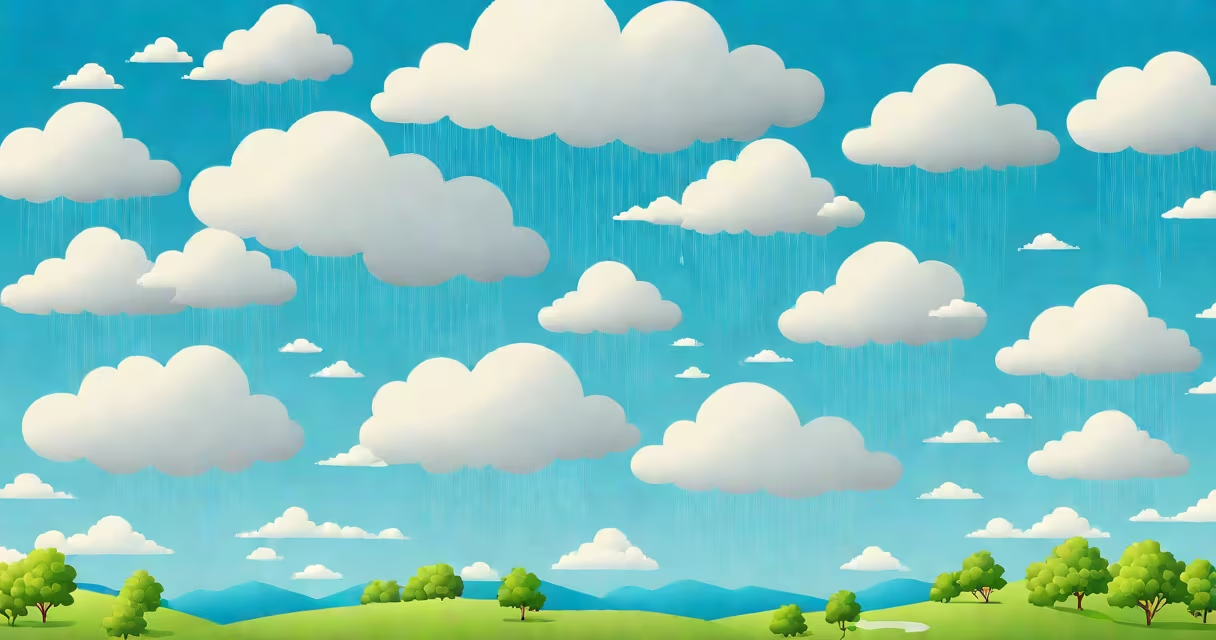
Clouds and the water cycle describe how water evaporates, condenses into clouds, and returns to Earth as precipitation. This continuous process moves water through the atmosphere, oceans, and land.
Water from oceans, lakes, and rivers evaporates due to the sun's heat, turning into invisible water vapor. As warm air rises, it cools, and the vapor condenses into tiny water droplets or ice crystals around dust particles, forming clouds. This process is called condensation.
Clouds vary based on altitude and formation:
| Cloud Type | Altitude | Role in Water Cycle |
|---|---|---|
| Cirrus | High (16,000-45,000 feet) | Made of ice crystals, often precede storms |
| Cumulus | Low to middle (2,000-20,000 feet) | Fluffy and white, indicate fair weather |
| Stratus | Low (up to 6,500 feet) | Gray and uniform, bring drizzle or light snow |
Each cloud type plays a role in precipitation, which returns water to the surface as rain, snow, or sleet.
When cloud droplets grow large enough, gravity pulls them down as precipitation. This water replenishes rivers, lakes, and aquifers, completing the cycle. For example, rainwater flows into rivers, which eventually return to the ocean, where evaporation begins the cycle again.
Many people believe clouds always bring rain, but some, like cirrus clouds, form too high for precipitation. Others think water disappears after evaporation, but it simply changes form into vapor., not all precipitation reaches the ground-some evaporates mid-air, a process called virga.
On a warm summer day, water from a lake evaporates, rising into the air as vapor. As the vapor cools, it condenses into tiny droplets around dust or pollen, forming cumulus clouds. These clouds may grow and produce afternoon thunderstorms, releasing rain that returns to the lake, repeating the cycle.