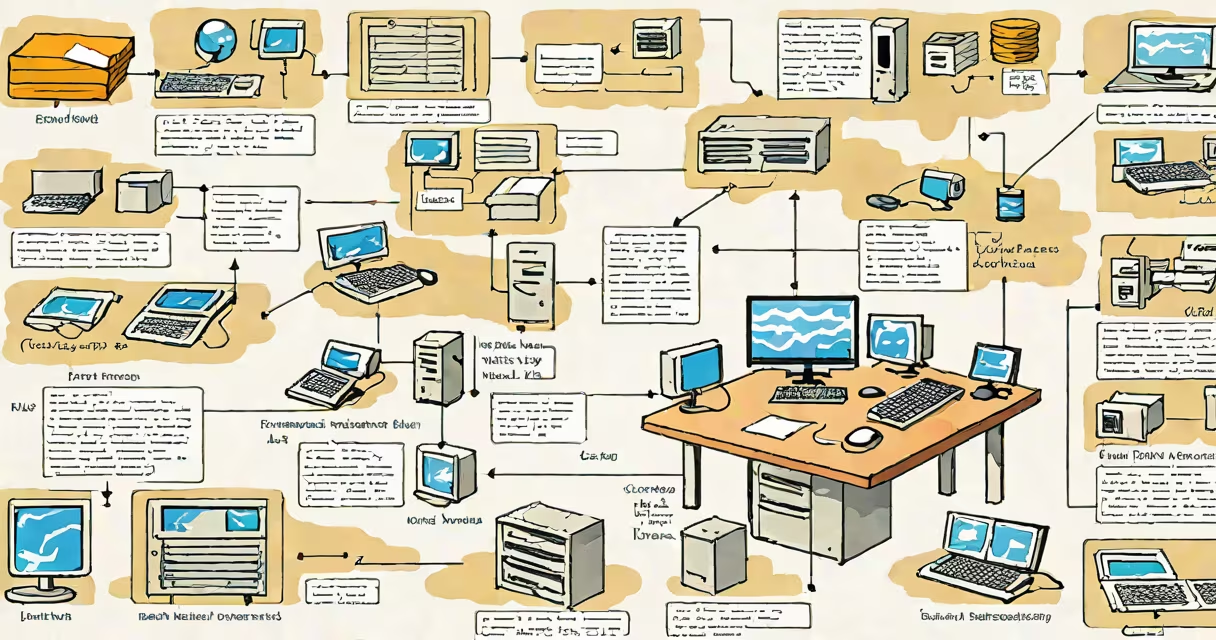
Database software is computer program that stores, retrieves, and manages structured data efficiently. These systems organize information into tables, records, and fields, allowing users to perform operations like querying, reporting, and analysis.
Database software uses a database management system (DBMS) to interact with users and applications. The DBMS processes requests, performs updates, and ensures data integrity. Most database software relies on structured query language (SQL) for managing and manipulating data, though some use alternative methods like document-based storage.
| Type | Description | Examples |
|---|---|---|
| Relational Databases | Organizes data into tables with rows and columns, using relationships between tables to structure data | MySQL, PostgreSQL, Microsoft SQL Server |
| NoSQL Databases | Uses flexible schemas to accommodate unstructured data, often for big data applications | MongoDB, Cassandra, Redis |
| Cloud Databases | Hosted on cloud platforms, offering scalability and accessibility from anywhere | Amazon RDS, Google Cloud SQL, Azure SQL Database |
Database software powers critical functions in businesses, governments, and organizations. Retailers use it to track inventory and sales, while healthcare providers rely on it to manage patient records. Financial institutions use database software for transactions and reporting, and educational institutions use it for student information systems.
For example, a university might use database software to store student records, course schedules, and faculty information. The software allows administrators to generate reports on enrollment trends, track student progress, and manage class registrations efficiently.
While spreadsheets like Excel can store and manipulate data, they lack the advanced features of database software. Spreadsheets are limited in handling large datasets and multiple users simultaneously. Database software offers better performance, security, and scalability for complex data management tasks.
For instance, a business tracking thousands of customer orders would struggle with a spreadsheet but could efficiently manage the data with database software. The software can handle concurrent access, ensure data consistency, and provide advanced analytics capabilities.
I once helped a small business migrate software. The transition improved their data accuracy, reduced manual errors, and allowed them to generate detailed reports quickly. The database software also enabled them to handle more customers without overwhelming their system.