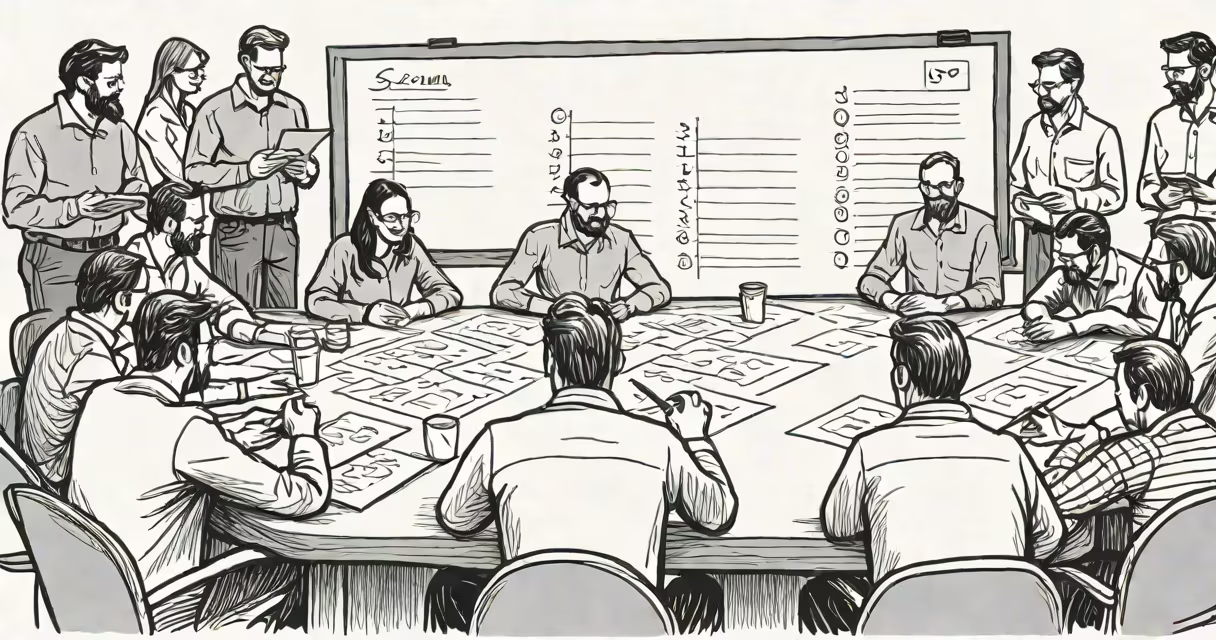
Scrum is an agile structure for managing complex projects, emphasizing iterative progress, self-organization, and cross-functional teamwork. It structures work into time-bound cycles called sprints, typically lasting 2-4 weeks.
Scrum divides work into small, manageable tasks assigned to sprints. Teams hold short meetings to assess progress, plan next steps, and adapt to changes. This continuous feedback loop ensures alignment with evolving goals.
For example, a software development team might use a 2-week sprint to build a new feature. They start with a sprint planning session, then meet daily for 15-minute standups to discuss progress. At the end of the sprint, they review the work and adjust plans for the next cycle.
| Component | Role |
|---|---|
| Scrum Master | Facilitates the process, removes obstacles, and ensures the team follows scrum principles. |
| Product Owner | Represents stakeholders, defines priorities, and ensures the team delivers value. |
| Development Team | A group of professionals who do the actual work, such as coding, testing, or designing. |
| Product Backlog | A list of features, improvements, and bug fixes prioritized by the product owner. |
| Sprint Backlog | The set of tasks selected from the product backlog for a specific sprint. |
| Increment | The sum of all completed product backlog items during a sprint, representing a potentially shippable product. |
Scrum is widely used in software development, marketing, and even education due to its adaptability. It thrives in environments where requirements evolve and collaboration is key.
For instance, a marketing team might use scrum to launch a campaign. They break the project into sprints, focusing on different aspects like content creation, social media planning, and analytics in each cycle. This approach allows them to respond quickly to market changes and customer feedback.
Many confuse scrum with other agile frameworks like Kanban or assume it's only for software development. While scrum originated in software, its principles apply to any project requiring flexibility and collaboration.
Another misconception is that scrum eliminates structure. In reality, it provides a clear structure with defined roles and ceremonies, ensuring teams stay organized while adapting to change.
I've seen scrum change chaotic projects into well-oiled machines. A team I worked with struggled with shifting deadlines until they adopted scrum. By breaking their work into sprints and holding daily standups, they improved communication and delivered results faster.