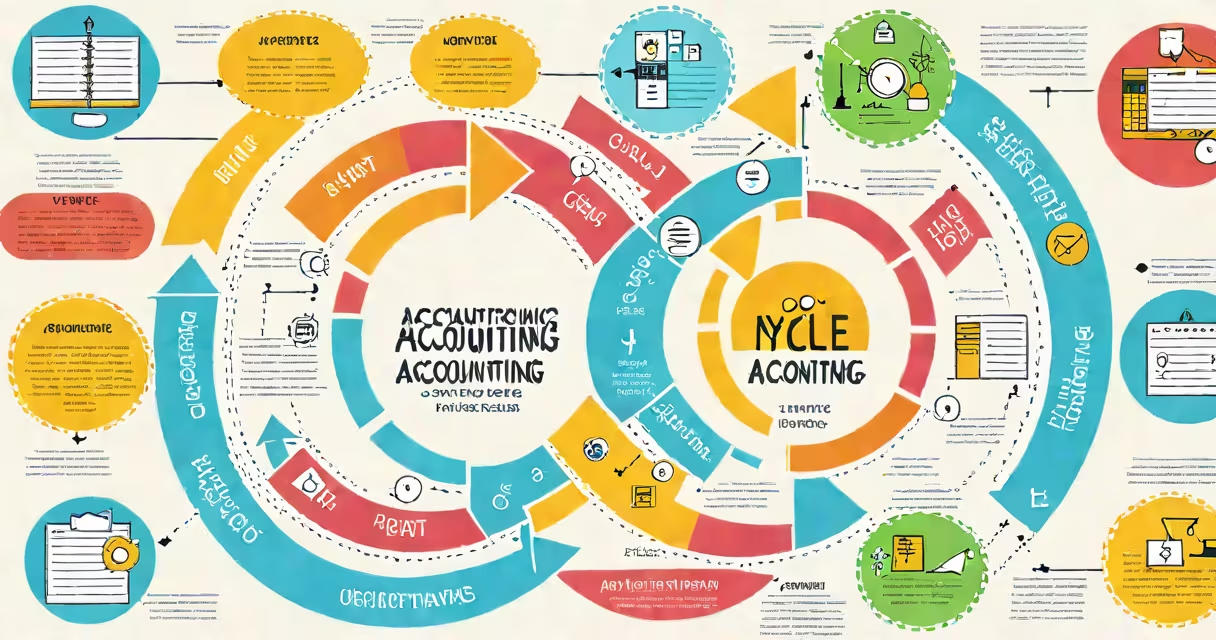
The accounting cycle is the step-by-step process businesses use to record, analyze, and report financial transactions during a specific period. It begins with recording transactions and ends with preparing financial statements.
The accounting cycle operates on a repeating schedule, typically monthly, quarterly, or annually. Each cycle produces a complete set of financial statements, which are then archived before the next cycle begins. This repetition ensures consistent financial tracking and reporting.
For example, a retail business might run a monthly accounting cycle to monitor inventory purchases, sales, and expenses. At the end of each month, they generate financial statements to assess profitability and make informed decisions.
The accounting cycle consists of eight core steps:
Many people confuse the accounting cycle with the worksheet in accounting. While a worksheet is a tool used during the accounting cycle to organize and adjust data, the accounting cycle itself is the entire process of recording, analyzing, and reporting financial transactions.
Another misconception is that the accounting cycle only applies to large corporations. In reality, businesses of all sizes, including small businesses and sole proprietorships, use the accounting cycle to manage their finances effectively.
The accounting cycle provides a structured structure for tracking financial activities, ensuring accuracy, and complying with regulations. Without it, businesses would struggle to monitor their financial health, make informed decisions, and meet reporting requirements.
For instance, a restaurant owner uses the accounting cycle to track daily sales, food costs, and labor expenses. By following the cycle, the owner can identify trends, control costs, and ensure the business remains profitable.
During my time working at a small accounting firm, I observed how the accounting cycle helped clients maintain financial clarity. One client, a local bakery, struggled with cash flow until they implemented the accounting cycle. By recording transactions, reconciling accounts, and generating monthly financial statements, they identified unnecessary expenses and improved their profitability.
This experience reinforced the importance of the accounting cycle in helping businesses of all sizes achieve financial stability and growth.
The accounting cycle is a fundamental process that ensures accurate financial tracking and reporting. By understanding and implementing the eight steps of the accounting cycle, businesses can maintain financial health, comply with regulations, and make informed decisions.