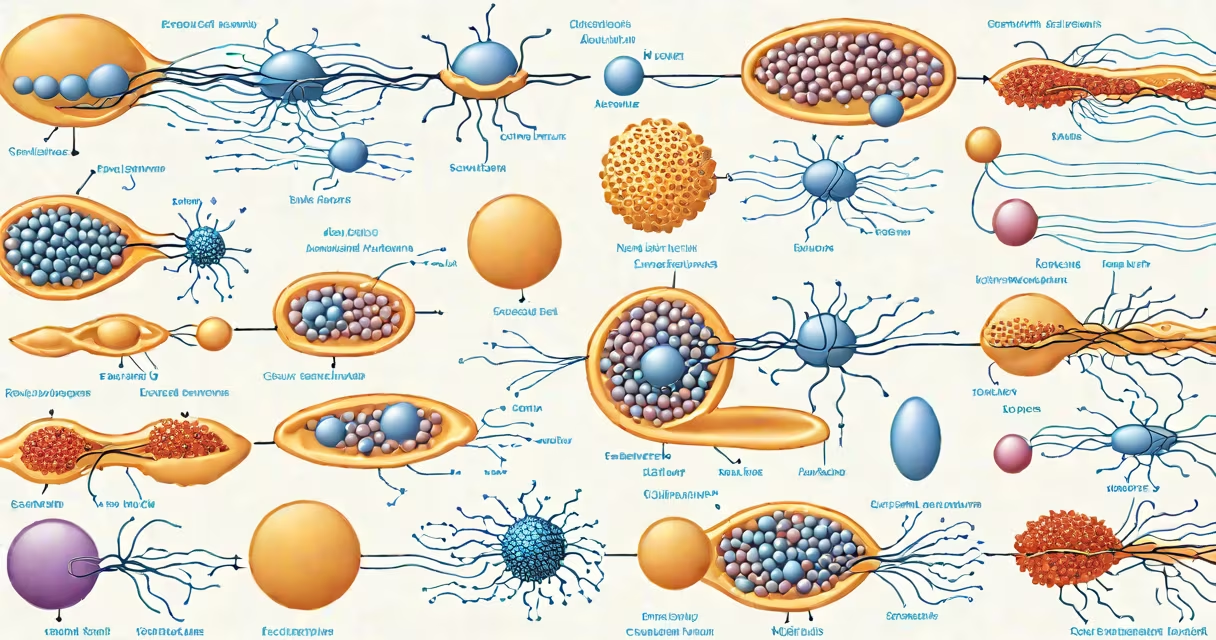
Sexual reproduction combines DNA from two parents, creating genetically unique offspring. Asexual reproduction produces clones from a single parent.
Sexual reproduction requires meiosis, producing gametes (sperm and eggs) with half the chromosomes. When these fuse during fertilization, they form a zygote with a full chromosome set. This process creates genetic variation through:
Asexual reproduction uses mitosis, producing genetically identical offspring. Common methods include:
| Reproduction Type | Process | Example Organism |
|---|---|---|
| Sexual | Meiosis + Fertilization | Humans, most animals |
| Asexual | Mitosis | Bacteria, some plants, a few animals |
Each human has about 3 billion base pairs of DNA. Sexual reproduction shuffles these combinations, creating offspring with about 99.9% shared DNA but unique traits. For example, siblings share about 50% of their DNA, making them similar but distinct.
Asexual reproduction produces clones with nearly identical DNA. While this provides stability, it limits adaptability to environmental changes.
Many assume all organisms reproduce sexually. In reality, about 99% of bacteria reproduce asexually, and some plants and animals alternate between both methods. For instance, dandelions primarily reproduce asexually through seeds but can also reproduce sexually.
Another myth is that asexual reproduction is always simpler. While it's common in single-celled organisms, complex species like some lizards and stick insects also use it. The Komodo dragon, for example, can reproduce both sexually and asexually.
I once observed a biology lab where students compared yeast cultures reproducing sexually and asexually. The sexually reproducing cultures showed greater diversity in colony morphology, demonstrating the benefits of genetic variation.
Sexual reproduction dominates in complex, multicellular organisms requiring genetic diversity for survival. Asexual reproduction is common in stable environments where rapid population growth is beneficial. Some organisms, like certain plants and fungi, switch between both methods depending on environmental conditions.
Research from the University of Arizona suggests that asexual reproduction may have evolved first, with sexual reproduction emerging later as a mechanism to promote genetic diversity and adaptability.