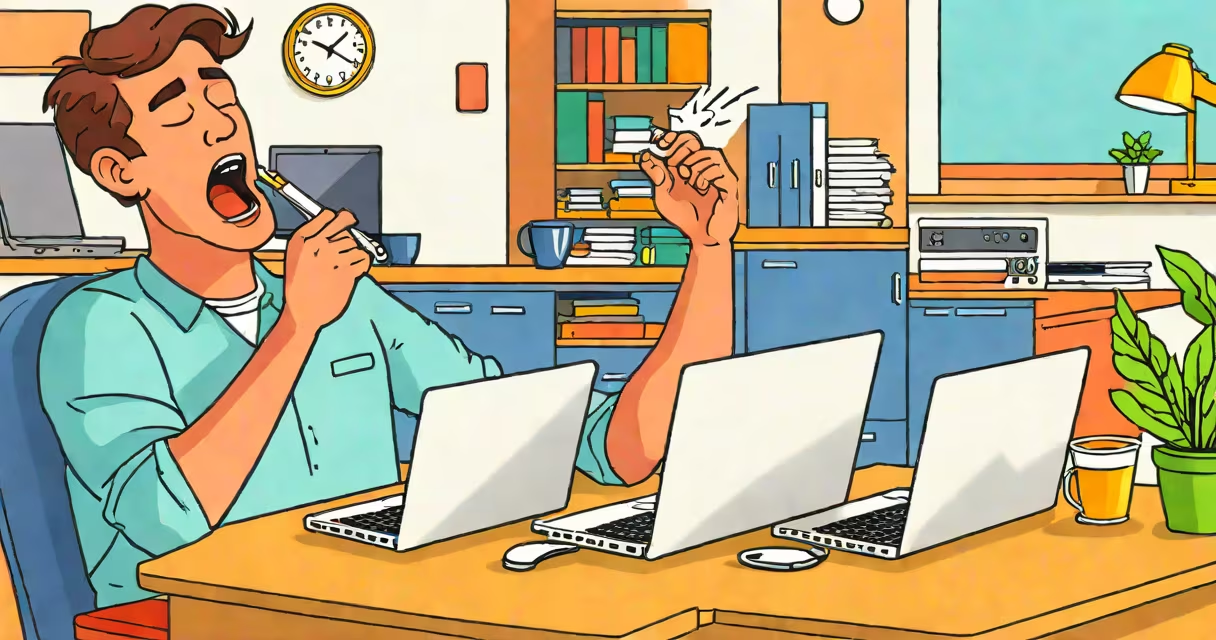
Sleepy describes the urge to fall asleep, while tired indicates physical or mental exhaustion. These states often overlap because sleep deprivation worsens fatigue.
Sleepiness is your brain's signal that it needs rest to consolidate memories and repair cells. The American Academy of Sleep Medicine notes that sleepiness increases with longer wakefulness and peaks in the early morning and afternoon.
The body regulates sleepiness through adenosine, a chemical that builds up during waking hours and dissipates during sleep. Caffeine blocks adenosine receptors, temporarily masking sleepiness.
Fatigue has three primary forms:
| Type | Key Features | Example |
|---|---|---|
| Physical fatigue | Muscle weakness after exertion | Legs feeling heavy after running |
| Mental fatigue | Cognitive sluggishness from prolonged focus | Struggling to solve math problems after hours of work |
| Chronic fatigue | Persistent exhaustion unrelated to activity | Feeling drained after light chores |
Poor sleep exacerbates fatigue. A study in Sleep journal found that even one night of restricted sleep impairs cognitive performance as much as staying awake for 24 hours. When you're sleep-deprived, your body conserves energy, making tasks feel harder.
I noticed this firsthand after pulling an all-nighter for work. Simple tasks like typing felt exhausting, and my eyes kept drooping-classic signs of both sleepiness and mental fatigue.
People often confuse sleepiness with fatigue, assuming they'll feel refreshed after sleeping. However, chronic fatigue persists even after adequate sleep, often signaling underlying health issues like anemia or thyroid disorders.
Another myth is that napping always cures fatigue. While naps help, the National Sleep Foundation recommends keeping them under 30 minutes to avoid sleep inertia-a groggy feeling that worsens fatigue temporarily.
If fatigue lasts weeks despite good sleep hygiene, consult a doctor. Persistent fatigue may indicate conditions like sleep apnea or depression. The Mayo Clinic advises tracking your sleep patterns and daily activities to identify triggers.