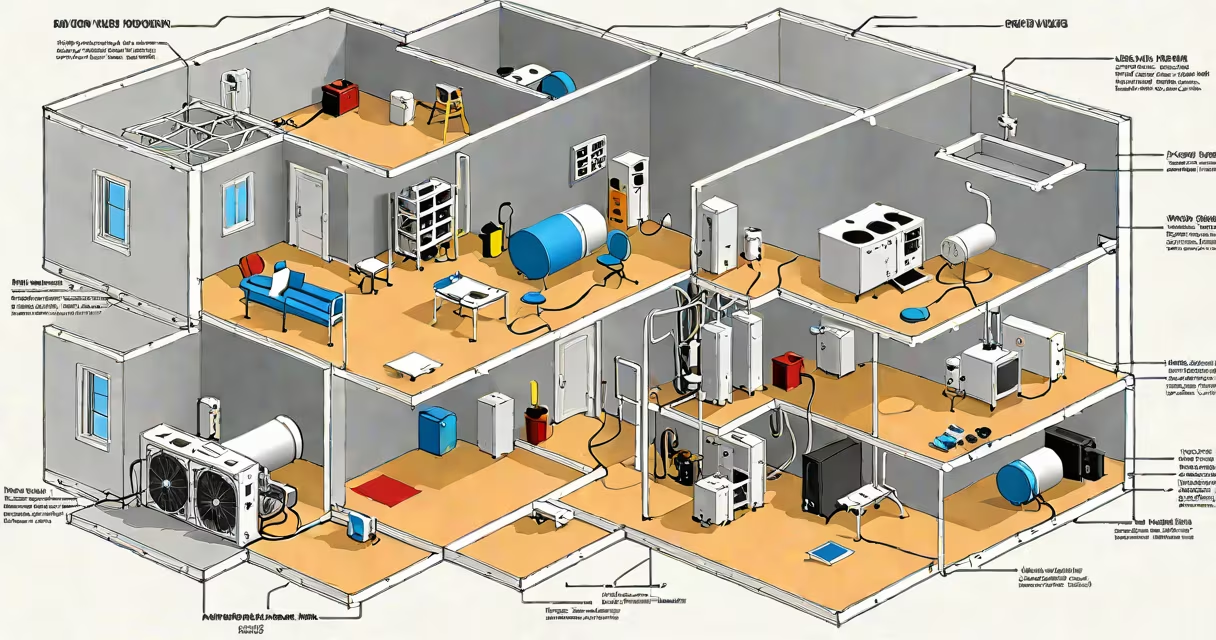
A do-it-yourself multi zone mini split is a ductless air conditioning system that uses one outdoor compressor/condenser unit connected to multiple indoor air-handling units, allowing independent temperature control in different zones. These systems are popular for adding cooling or heating to specific areas without extensive ductwork.
Each indoor unit connects to the outdoor unit via refrigerant lines and electrical wiring. The outdoor unit contains the compressor, which circulates refrigerant through the system. Indoor units have their own thermostats, allowing different zones to maintain different temperatures. When you install a multi zone mini split yourself, you'll need to mount the indoor units, run the refrigerant lines, and connect the electrical components.
Multi zone mini splits consist of:
| System Type | Zones | Typical Application |
|---|---|---|
| Single-zone | 1 | Single room or small space |
| Multi-zone (2-5 zones) | 2-5 | Multiple rooms or areas |
| Modular multi-zone | 6+ | Large homes or commercial spaces |
Many people confuse multi zone mini splits with traditional central air systems. Unlike central air, which uses ducts to distribute conditioned air throughout a home, mini splits deliver air directly to each zone. Another misconception is that mini splits can only cool, but most modern systems provide both heating and cooling.
According to the U.S. Department of Energy, ductless mini split systems are among the most efficient ways to condition individual rooms or zones. They typically use 30% less energy than window units and can reduce energy costs by up to 50% compared to baseboard heaters.
Before attempting a DIY installation, consider these factors:
When I installed a dual-zone mini split in my home office and garage, I chose a system with pre-charged line sets to simplify the process. The installation took about six hours, including mounting the indoor units, running the refrigerant lines through the attic, and connecting the electrical components. The most challenging part was ensuring proper slope on the refrigerant lines to prevent oil from pooling.
These systems work well in:
For best results, place indoor units away from direct sunlight and heat sources. Keep at least 7 feet of clearance between the outdoor unit and any obstructions for proper airflow.