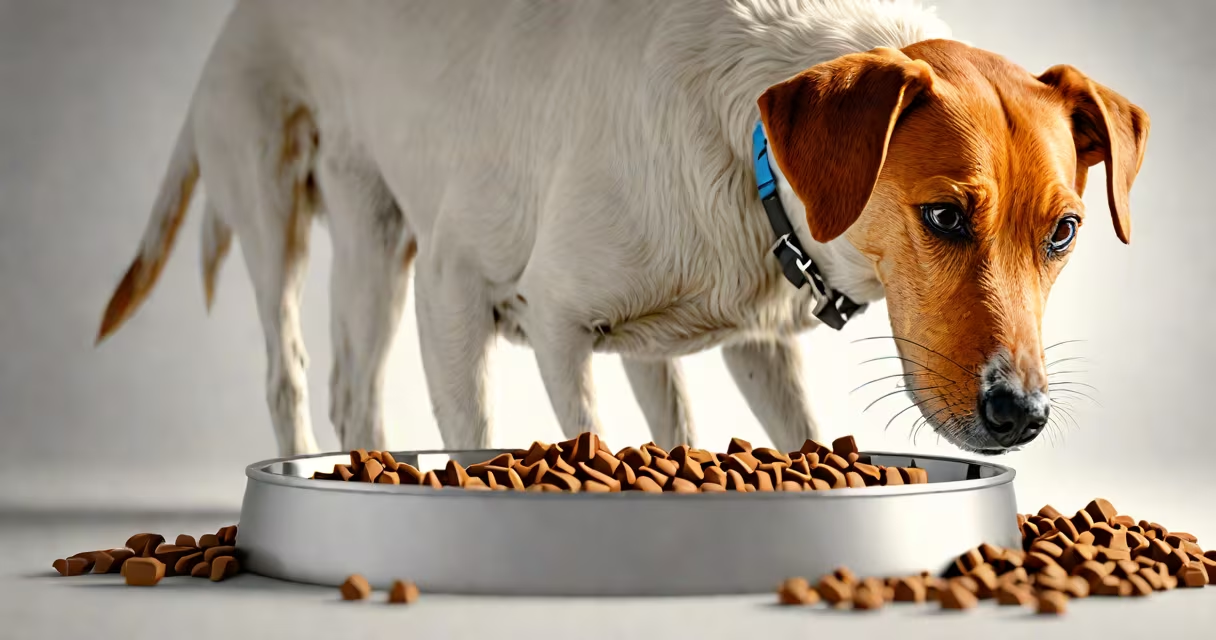
A dog eating too fast often gulps air along with food, leading to bloating, vomiting, or choking. This behavior, called "gobbling," is common in competitive eaters or anxious dogs.
Dogs evolved to eat quickly to avoid losing food to competitors. Domestic dogs retain this instinct, especially in multi-pet households. Stress, competition, or small meals can trigger rapid eating.
Fast eating causes aerophagia (air swallowing), which leads to bloating. Severe cases may progress to gastric dilatation-volvulus (GDV), a life-threatening condition. Dogs may also vomit undigested food or choke on large pieces.
Use slow-feeder bowls with ridges or mazes to force slower eating. Puzzle feeders distribute kibble in hidden compartments, requiring effort to access. Hand-feeding small portions also works.
For anxious dogs, feed in a quiet space away from other pets. Improve the food bowl slightly to encourage slower chewing. Some owners add large, safe objects like clean rocks to the bowl to obstruct quick access.
If your dog frequently vomits after eating, consult a vet. Chronic vomiting may indicate underlying health issues like gastrointestinal disorders or food allergies. Dogs that shake while eating or exhibit signs of distress should be evaluated immediately.
If your dog vomits regularly from eating too fast, read about preventing vomiting and managing digestive issues.