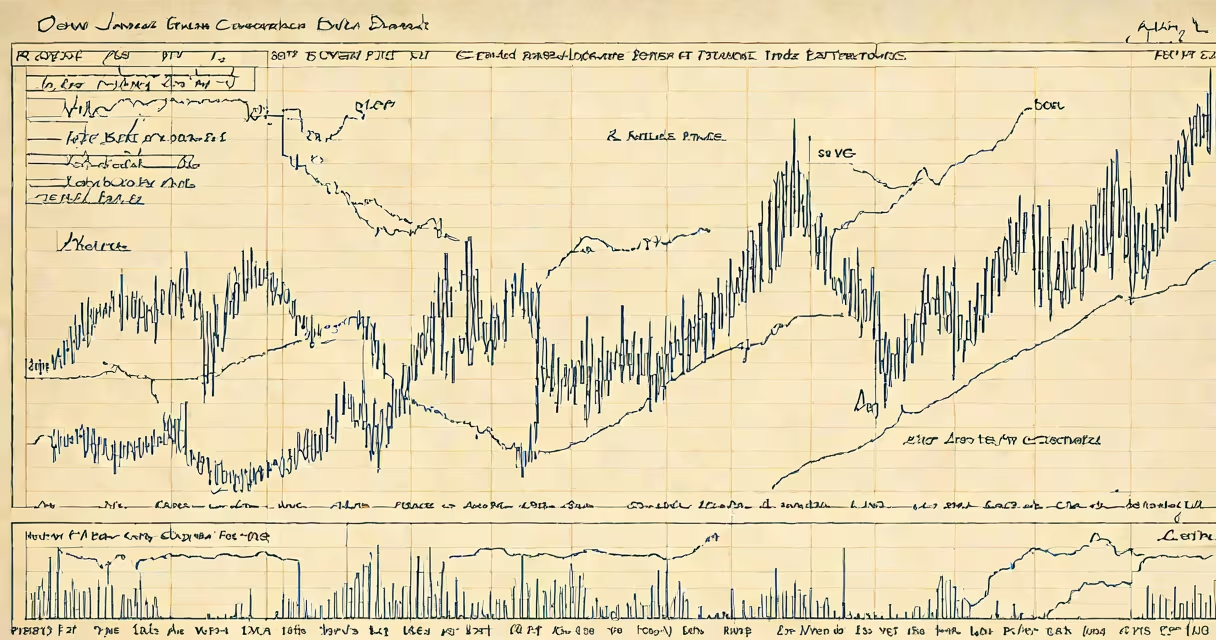
The Dow Industrial Average companies are the 30 large-cap U.S. stocks in the Dow Jones Industrial Average, a price-weighted index tracking major industries. These companies, such as Apple and UnitedHealth, are leaders in their sectors.
The Dow Jones Industrial Average, often called "the Dow," is a stock market index created by Charles Dow and Edward Jones in 1896. It tracks the performance of 30 large, publicly traded companies listed on U.S. stock exchanges. The index is price-weighted, meaning the stocks with higher share prices have a greater influence on the index's movement.
To calculate the Dow, the sum of the prices of the 30 component stocks is divided by a divisor, which is adjusted for stock splits and other corporate actions. This divisor ensures the index reflects changes in the actual market value of the companies rather than just their share prices.
The 30 companies in the Dow represent various industries, including technology, healthcare, finance, consumer goods, and industrials. Here are some notable examples:
| Company | Industry | Added to Dow |
|---|---|---|
| Apple | Technology | 2015 |
| UnitedHealth Group | Healthcare | 2012 |
| Goldman Sachs | Finance | 2013 |
| Coca-Cola | Consumer Goods | 1987 |
| Boeing | Industrials | 1987 |
The Dow is one of the most widely followed equity indices in the world. Investors use it as a barometer for the health of the U.S. stock market and economy. When the Dow rises, it generally indicates investor confidence and economic growth. Conversely, a declining Dow may signal economic troubles or investor pessimism.
Many investors use the Dow to make decisions about their portfolios. For example, if the Dow is performing well, investors might consider adding more stock exposure. Conversely, if the Dow is struggling, they might look to reduce risk by holding more cash or investing in defensive assets like bonds.
One common misconception is that the Dow represents the entire U.S. stock market. In reality, it only includes 30 companies, which is a tiny fraction of the thousands of stocks trading on U.S. exchanges., the Dow is price-weighted, which means companies with higher share prices have a greater impact on the index's movement, regardless of their market capitalization.
Another misconception is that the Dow is the best measure of market performance. While it is a well-known index, other indices like the S&P 500, which includes 500 large-cap companies, are often considered better representations of the broader market due to their larger sample size and market-cap weighting.
Most people don't realize that the Dow is not the oldest U.S. stock market index. That title belongs to the Dow Jones Transportation Average, which was created in 1884 and tracks the performance of transportation companies like airlines and trucking firms.
I once attended a conference where a panel of financial experts discussed the history of the Dow. One expert pointed out that the original Dow included companies like General Electric and American Cotton Oil, which are vastly different from the tech giants that dominate the index today. This highlights how the Dow has evolved to reflect changes in the U.S. economy over time.
The Dow Industrial Average companies are a diverse group of 30 large-cap U.S. stocks representing major industries. While the Dow is a widely followed index, it is essential to understand its limitations and consider other indices for a more complete view of the market.