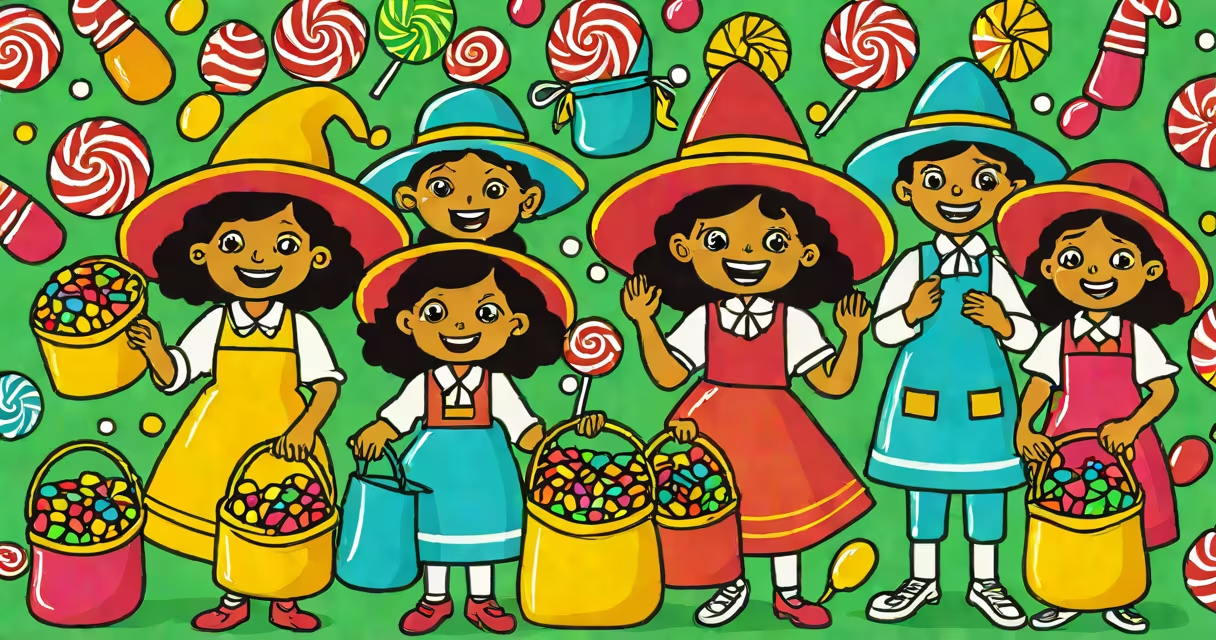
Dulce o truco is a Latin American Halloween tradition where children go door-to-door asking for candy or performing a small trick if none is given. The phrase translates to "candy or trick," mirroring the English "trick-or-treat."
The tradition shares roots with North American trick-or-treating but differs in cultural context and execution. In many Latin American countries, children often sing songs or recite poems to earn their treats, adding a layer of performance to the exchange.
Children visit neighbors' homes, typically in groups, and ask for candy. If the homeowner doesn't provide sweets, the children may play a harmless prank, such as ringing the doorbell repeatedly or making funny noises. This interaction is generally lighthearted and community-oriented.
Unlike in some North American traditions where tricks can be destructive, dulce o truco emphasizes fun and creativity. For example, in Mexico, children might sing a traditional song like "Dulce o truco, nos gustan los dulces, si no nos dan, les haremos un truco," which translates to "Candy or trick, we love candies, if you don't give us any, we'll play a trick on you."
Dulce o truco varies by region but generally falls into two categories:
| Type | Description |
|---|---|
| Candy Exchange | Children receive candy or small toys in exchange for greetings or songs. |
| Trick Performance | If no treat is given, children perform a short, harmless trick like a joke or a dance. |
Dulce o truco is popular in Mexico, Argentina, Chile, and other Latin American countries. It's celebrated on October 31st, coinciding with Halloween, but it also ties into local traditions like Día de los Muertos (Day of the Dead) in Mexico. The practice fosters community bonding and provides a fun activity for children during the holiday season.
One common misconception is that dulce o truco is identical to North American trick-or-treating. While both involve exchanging candy for tricks, dulce o truco often includes singing or performing, making it more interactive., the tricks in dulce o truco are usually playful rather than mischievous.
During a visit to Mexico City, I participated in dulce o truco with local children. They sang a catchy tune at each door, and homeowners eagerly handed out candy. The atmosphere was joyful, and the children's performances added a unique cultural flair to the tradition.
Dulce o truco is a beloved Latin American tradition that blends Halloween festivities with cultural performances. It encourages community interaction and provides a memorable experience for children and adults alike.