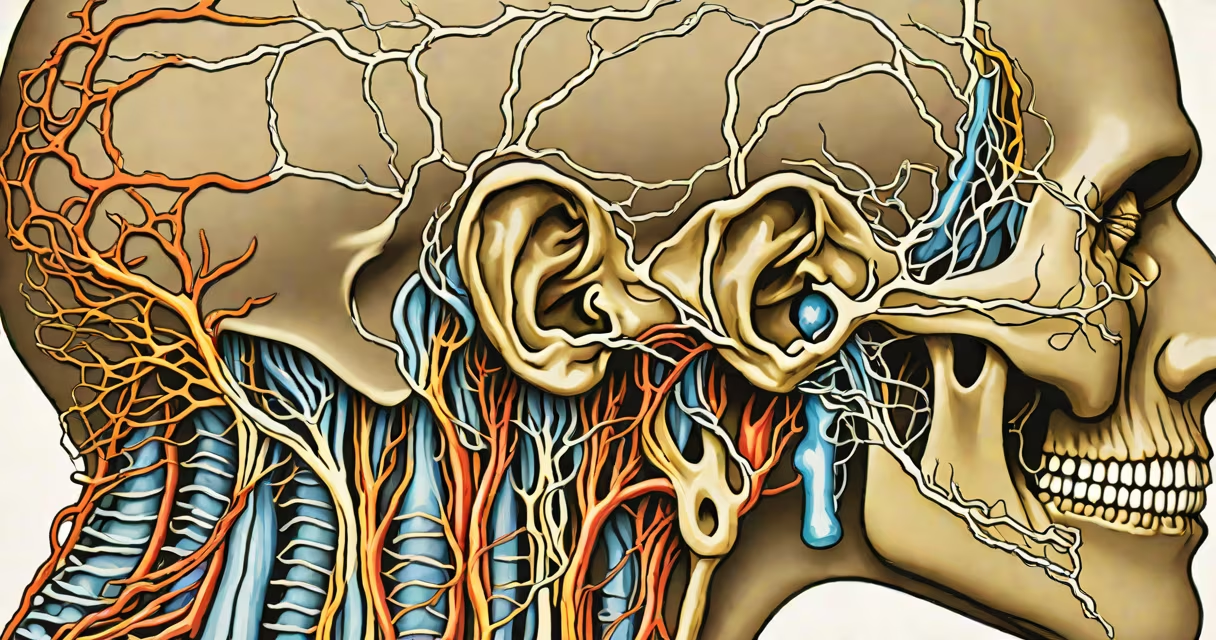
Ear pain, headache, and toothache often occur together because they share nerve pathways and anatomical connections. This phenomenon, called referred pain, happens when pain from one area radiates to another.
The trigeminal nerve, which serves the face, and the vagus nerve, which affects the ear, intersect near the ear canal. When dental issues irritate these nerves, pain can spread to the ear and head. For example, a cavity in a molar might feel like ear pain because the same nerve branch serves both areas.
The most common causes of this pain trio are:
Many people assume ear pain always comes from the ear itself. However, studies show that 60% of ear pain cases originate elsewhere, often from dental problems (NIH). A 2018 study in Journal of Oral & Facial Pain found that 85% of patients with unexplained ear pain had undiagnosed dental issues.
If ear pain, headache, and toothache persist for more than 48 hours, consult a dentist. A thorough exam can rule out dental causes. In my practice, I've seen patients with chronic ear pain find relief after treating an infected molar. The key is identifying the source early.