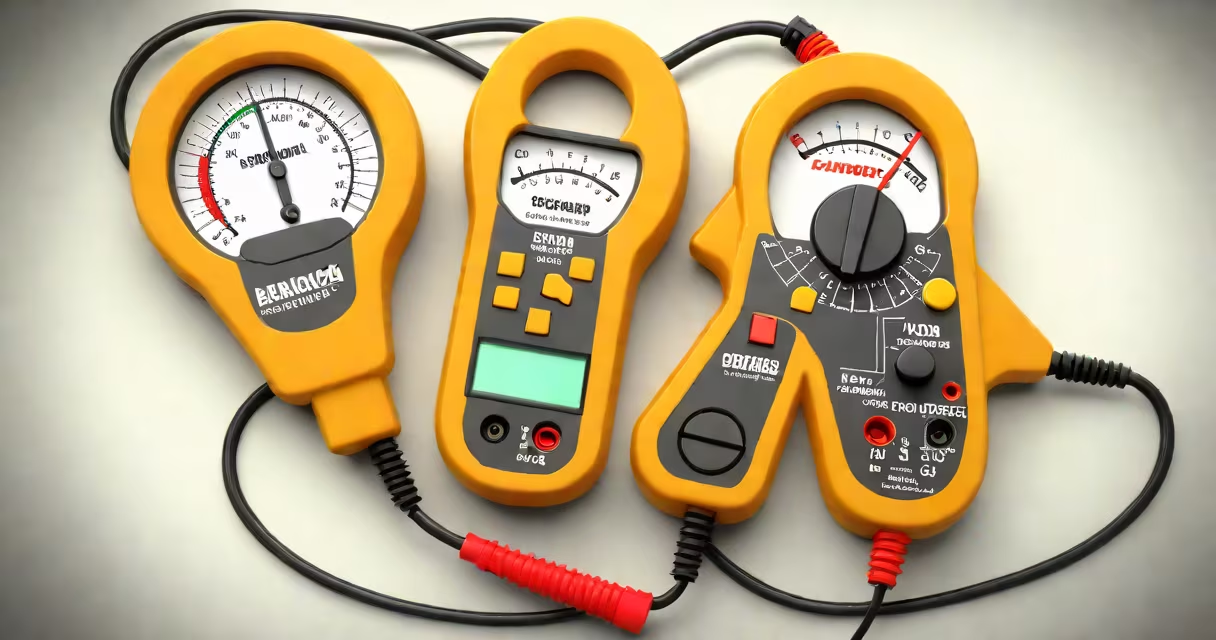
An earth leakage clamp meter is a handheld device that measures stray currents in electrical circuits to detect ground faults. It clamps around a wire to measure current without disconnecting it.
The meter uses a current transformer to sense magnetic fields around a conductor. When a ground fault occurs, some current flows through the earth path instead of returning through the neutral wire. The meter detects this imbalance and measures the leakage current.
| Type | Features | Typical Use |
|---|---|---|
| Digital | LCD display, higher accuracy, often includes voltage measurement | Industrial settings, professional electricians |
| Analog | Needle-based display, less precise, simpler design | Basic troubleshooting, DIY projects |
| Smart | Bluetooth/Wi-Fi connectivity, data logging, app integration | Large facilities, predictive maintenance |
Ground faults can cause electrical shocks, fires, or equipment damage. Regular testing with an earth leakage clamp meter ensures compliance with safety standards like OSHA and IEC 61000. For example, a factory might test machinery monthly to prevent accidents.
Some users confuse earth leakage meters with standard clamp meters. While both measure current, earth leakage meters specifically detect stray currents to ground. A regular clamp meter won't identify ground faults.
During a routine inspection, an electrician clamps the meter around a live wire in a commercial kitchen. The meter displays 15 mA of leakage current. This exceeds the safe threshold of 10 mA, indicating a ground fault. The electrician traces the issue to a damaged appliance cord and replaces it, preventing a potential fire hazard.