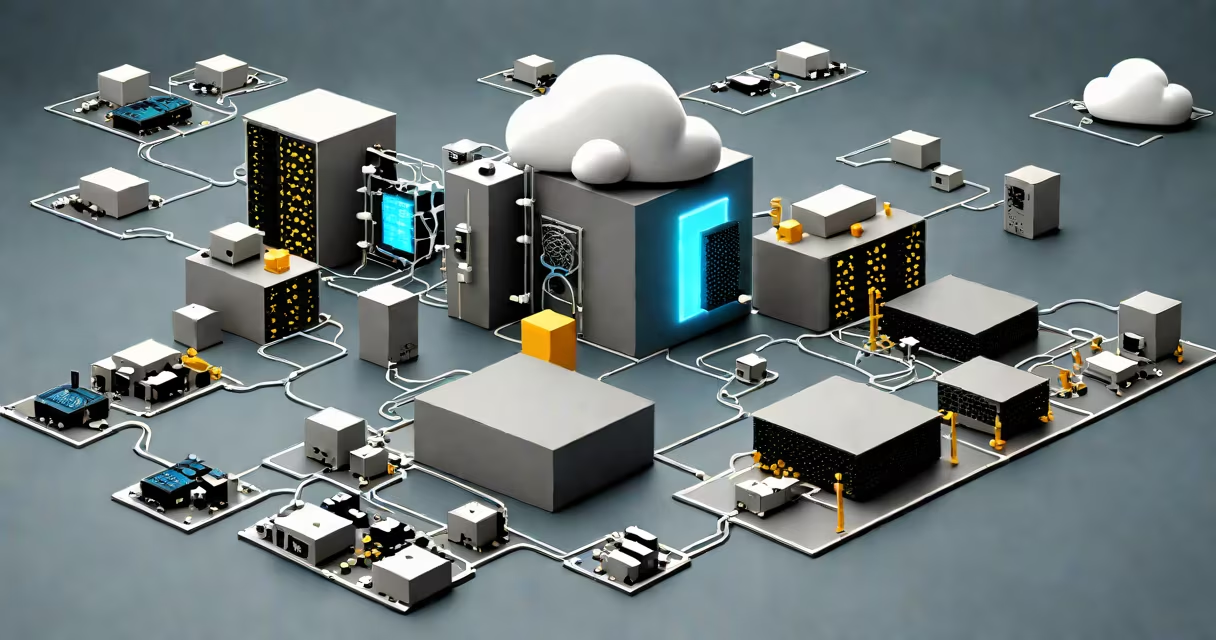
Edge computing applications process data close to where it's generated, reducing latency and bandwidth use. This decentralized approach enhances performance for IoT devices, autonomous vehicles, and industrial systems.
Edge computing shifts data processing from centralized cloud servers to local edge devices or nodes. These devices-such as routers, gateways, or specialized hardware-handle tasks like filtering, aggregation, and preliminary analysis before sending relevant data to the cloud.
For example, a smart factory might use edge computing to analyze sensor data from machines in real time. Instead of sending raw data to a distant cloud server, the edge node processes it locally, triggering immediate maintenance alerts if anomalies are detected.
| Application Type | Key Use Cases | Example |
|---|---|---|
| Industrial IoT | Predictive maintenance, process optimization | Siemens uses edge computing in factories to monitor equipment health. |
| Autonomous Vehicles | Real-time decision-making, collision avoidance | Tesla's cars process sensor data locally to go through roads safely. |
| Smart Cities | Traffic management, energy efficiency | Cisco's Kinetic for Cities platform manages streetlights and traffic signals. |
| Healthcare | Remote patient monitoring, diagnostic imaging | Medtronic's devices analyze patient data at the edge for faster insights. |
Edge computing reduces latency, which is critical for applications requiring real-time responses. For instance, autonomous vehicles must process sensor data instantly to avoid accidents. Offloading processing to the edge also cuts bandwidth costs and improves reliability by operating even with intermittent cloud connectivity.
According to a report by MarketsandMarkets, the global edge computing market is projected to reach $15.9 billion by 2027, growing at a CAGR of 17.6%. This growth is driven by the increasing adoption of IoT devices and the need for faster data processing.
Many confuse edge computing with fog computing, but they're distinct. Fog computing extends cloud computing to the edge, while edge computing focuses on processing data at the source itself., edge computing doesn't replace cloud computing-it complements it by handling tasks that require low latency.
Another misconception is that edge computing is only for large enterprises. Small businesses also benefit, such as retail stores using edge devices for real-time inventory management.
In 2023, I visited a warehouse using edge computing to track inventory. Sensors on shelves detected stock levels and sent alerts to workers' devices when items were low. This system reduced out-of-stock incidents by 30% compared to traditional cloud-based tracking.
Edge computing applications are transforming industries by enabling faster, more efficient data processing. As IoT adoption grows, expect even more new use cases to emerge.