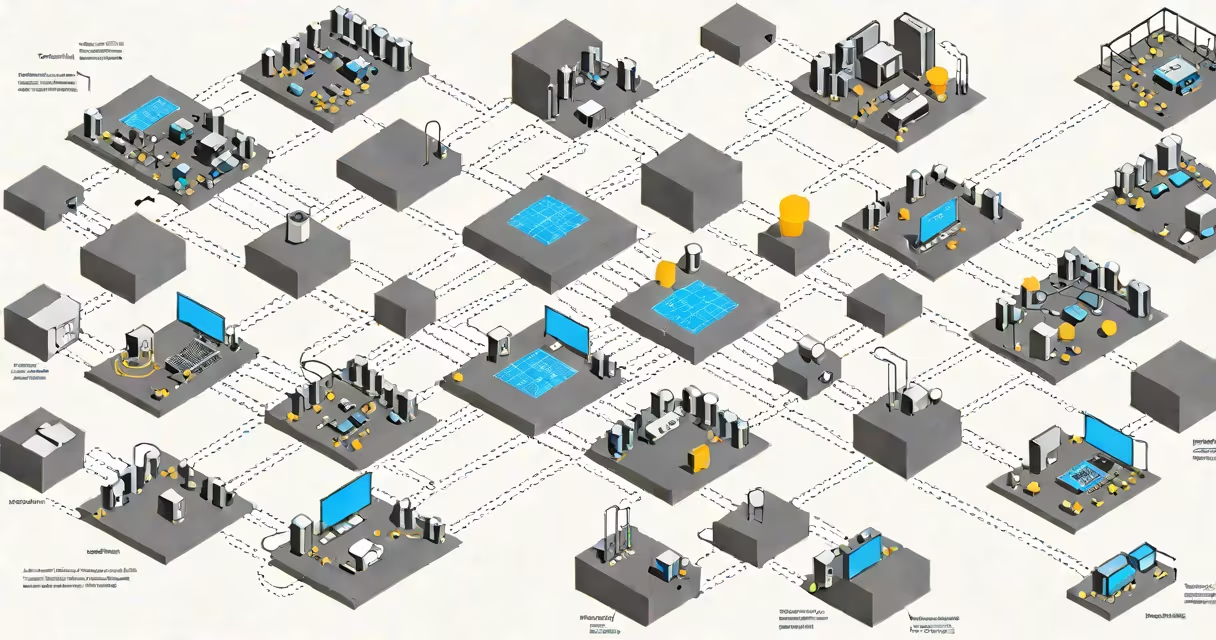
Edge computing companies specialize in decentralized processing systems that analyze data close to its source, minimizing latency and bandwidth demands. These firms develop hardware, software, and platforms that enable real-time processing at the network edge.
Traditional cloud computing sends data to centralized servers for processing. Edge computing reverses this flow by performing computations locally on edge devices or nearby servers. This proximity reduces lag and conserves bandwidth by filtering unnecessary data before transmission.
For example, an autonomous vehicle might process sensor data locally to make split-second decisions rather than waiting for cloud responses. Edge computing companies provide the infrastructure to support these operations.
| Type | Description | Example Companies |
|---|---|---|
| Hardware Providers | Manufacture edge devices and servers | Dell, HPE, NVIDIA |
| Software Platforms | Develop operating systems and management tools | Linux Foundation, VMware |
| Service Providers | Offer edge computing as a service | AWS, Microsoft Azure, Google Cloud |
Edge computing companies serve industries requiring low-latency processing. Key applications include:
According to a Statista report, the global edge computing market size is projected to reach $15.7 billion by 2025.
Many confuse edge computing with fog computing, though they differ in scale and purpose. Edge computing operates on individual devices or nearby servers, while fog computing involves a network of interconnected edge nodes working together.
For instance, a smart home system might use edge computing for local device control, while a city-wide traffic management system would rely on fog computing to aggregate and analyze data from multiple intersections.
Edge computing reduces latency, conserves bandwidth, and improves security by minimizing data exposure during transit. As IoT devices proliferate, edge computing companies provide essential infrastructure for real-time processing needs.
I worked with an edge computing company developing a solution for industrial equipment monitoring. By processing vibration data locally, we reduced cloud transmission by 70%, cutting costs and enabling predictive maintenance alerts.