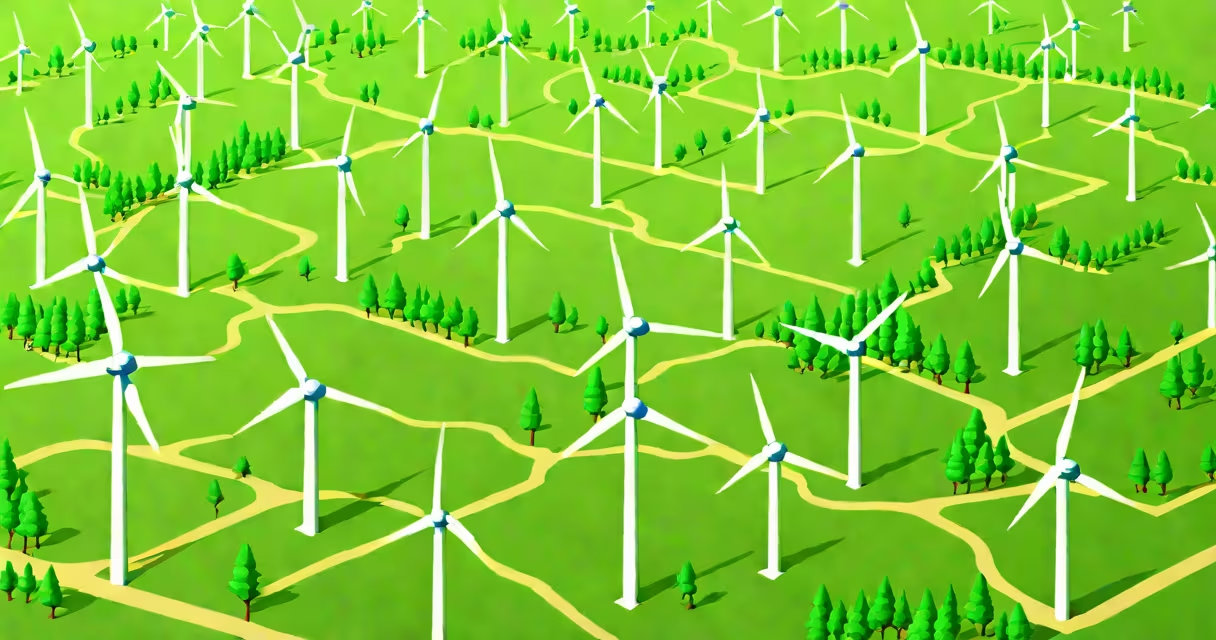
Electric producing windmills are large turbines that convert wind energy into electricity through spinning blades connected to generators. These structures play a important role in renewable energy production.
Wind turbines operate on a simple principle: when wind blows past the blades, it causes them to rotate. This rotation is transferred through a shaft to a generator, which converts mechanical energy into electrical energy. The electricity is then sent through transmission lines to homes and businesses.
The blades are designed to capture the maximum amount of wind energy. Most turbines have three blades, which are aerodynamically shaped to spin efficiently even in low wind speeds. The entire structure sits atop a tall tower to access stronger, more consistent winds.
Each wind turbine consists of several key components:
There are two primary types of wind turbines:
| Type | Description | Common Use |
|---|---|---|
| Horizontal-axis wind turbines (HAWT) | These have blades that rotate around a horizontal axis. Most modern wind turbines are of this type. | Large-scale wind farms and utility-scale power generation |
| Vertical-axis wind turbines (VAWT) | These have blades that rotate around a vertical axis. They are often omnidirectional, meaning they can capture wind from any direction. | Urban areas and small-scale applications |
Wind turbines are typically installed in areas with consistent wind speeds, such as coastal regions, plains, and open fields. They are used to generate clean, renewable energy, reducing dependence on fossil fuels and lowering greenhouse gas emissions.
For example, the largest wind farm in the United States, the Roscoe Wind Farm in Texas, has a capacity of over 780 megawatts, enough to power approximately 230,000 homes annually.
One common misconception is that wind turbines are inefficient. However, modern turbines can convert about 40-50% of wind energy into electricity, a significant improvement over older models. Another myth is that wind turbines are noisy, but advancements in design have reduced noise levels to those comparable to a quiet conversation.
Wind turbines are also sometimes confused with windmills, which are used for mechanical tasks like grinding grain or pumping water. Unlike windmills, wind turbines generate electricity.
As more people switch to electric vehicles, the demand for clean energy sources like wind power increases. Wind turbines help power electric grids, which in turn charge electric vehicles. For instance, Audi electric vehicles rely on electricity generated from various sources, including wind energy, to reduce their carbon footprint.
Electric producing windmills are a important part of the renewable energy field. By converting wind energy into electricity, they provide a clean, sustainable power source that helps reduce reliance on fossil fuels and lower carbon emissions.