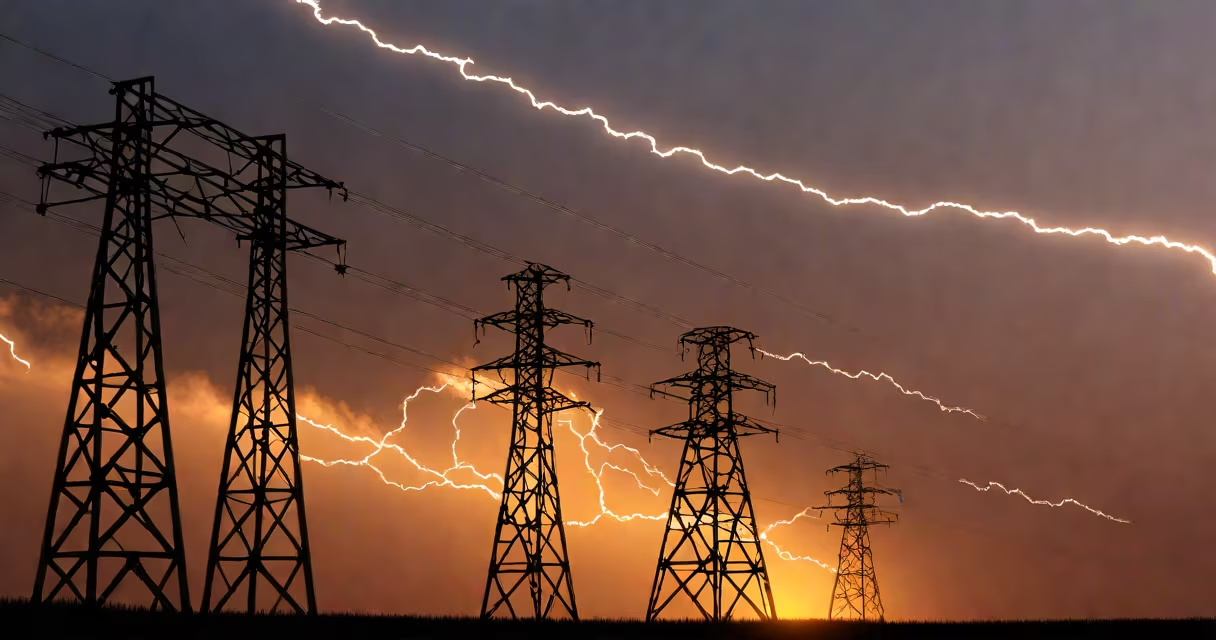
Electrical energy is energy caused by moving electric charges. It's a form of kinetic energy that powers nearly all modern devices. Unlike static electricity, which involves charges at rest, electrical energy deals with charges in motion.
When electrons flow through a conductor, they create electrical energy. This flow is called electric current, measured in amperes (amps). The energy comes from the movement of these charged particles, which can be harnessed to perform work.
For example, when you plug a lamp into a wall outlet, electrical energy flows through the cord to power the light bulb. The moving electrons collide with atoms in the filament, creating heat and light. This conversion shows how electrical energy can change into other types of energy.
| Type | Description | Example |
|---|---|---|
| Direct Current (DC) | Flows in one direction | Batteries in flashlights |
| Alternating Current (AC) | Periodically reverses direction | Household power outlets |
Electrical energy is essential for powering homes, businesses, and industries. It's used for lighting, heating, cooling, and operating appliances. In industries, it drives machinery and supports manufacturing processes.
One common application is in electric vehicles. These cars use large batteries to store electrical energy, which then powers electric motors to turn the wheels. Tesla's Model S, for instance, uses electrical energy stored in lithium-ion batteries to travel over 400 miles on a single charge.
Many people confuse electrical energy with electricity itself. While related, they are not the same. Electricity refers to the flow of electric charge, whereas electrical energy is the capacity to do work by using this flow.
Another misconception is that electrical energy is always safe. In reality, high voltages can be dangerous, which is why safety measures like circuit breakers and ground wires are important. For instance, a standard household outlet in the U.S. operates at 120 volts, but industrial settings may use thousands of volts.
I once witnessed a demonstration where a van de Graaff generator created visible arcs of electrical energy. The sparks were impressive, but the presenter emphasized the importance of respecting electricity's power and potential danger.
Electrical energy is often confused with other forms of energy. Here's how it differs:
Understanding these differences is important for grasping how energy converts from one form to another. For example, hydroelectric dams convert the kinetic energy of falling water into electrical energy using turbines and generators.
Solar panels demonstrate energy conversion in action. They absorb sunlight, converting solar energy into electrical energy. This process involves photovoltaic cells that generate an electric current when exposed to light.
A typical residential solar panel system can produce around 3-4 kilowatts of electrical energy per hour on a sunny day. This energy can power homes, charge electric vehicles, and even feed excess energy back into the grid.
For more on energy conversions, explore how different forms of energy interact and change. Understanding these principles is key to appreciating the role of electrical energy in our daily lives.