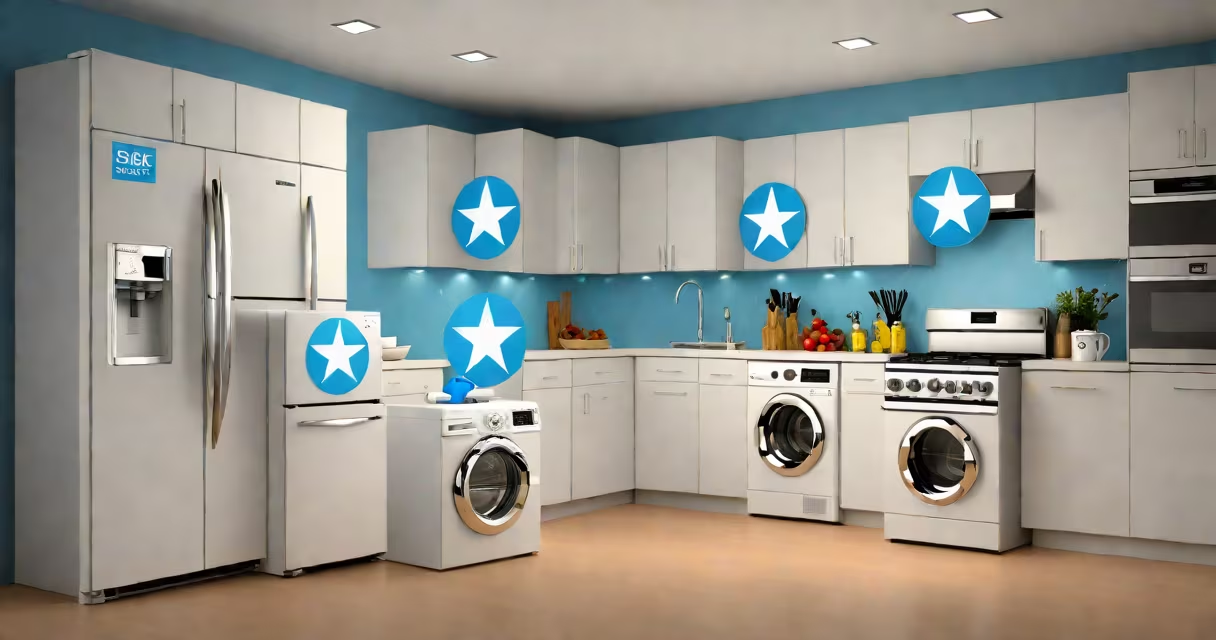
The Energy Star definition describes a certification program run by the U.S. Environmental Protection Agency (EPA) and U.S. Department of Energy (DOE) to identify energy-efficient products and practices. These products exceed minimum federal efficiency standards and save energy, money, and reduce greenhouse gas emissions.
To earn the Energy Star label, products must meet strict energy efficiency criteria set by the EPA and DOE. These criteria are based on rigorous testing and analysis to ensure products deliver real energy savings. For example, an Energy Star-certified refrigerator uses about 15% less energy than required by federal standards.
Energy Star certification applies to various product categories, including:
| Product Category | Energy Savings |
|---|---|
| Appliances | Refrigerators: 15% less energy, Washing machines: 25% less energy |
| Lighting | LED bulbs: 75% less energy, Last 25 times longer |
| Electronics | TVs: 25% less energy, Computers: 30% less energy |
| Heating and Cooling | Furnaces: 15% less energy, Air conditioners: 10% less energy |
Energy Star products are used in homes, businesses, and institutions across the United States. The certification helps consumers identify energy-efficient products, reducing energy bills and environmental impact. For instance, a typical household can save about $500 per year by using Energy Star products.
Energy Star also certifies new homes and commercial buildings, ensuring they are designed and built to be more energy-efficient than standard building codes require. These buildings use less energy for heating, cooling, and lighting, resulting in lower utility bills and reduced carbon emissions.
One common misconception is that Energy Star products are more expensive to purchase. While some products may have a higher upfront cost, the long-term savings on energy bills often outweigh the initial investment. For example, an Energy Star-certified air conditioner might cost more initially but can save up to $115 per year in energy costs.
Another misconception is that Energy Star products are less effective than their non-certified counterparts. In reality, Energy Star products undergo rigorous testing to ensure they meet high-performance standards while saving energy. For instance, Energy Star-certified televisions use 25% less energy than conventional models without compromising on performance.
I once helped a friend upgrade their home with Energy Star-certified appliances. Within a year, their energy bills dropped by 20%, and they noticed a significant improvement in the performance of their new appliances. This firsthand experience reinforced the value of Energy Star certification.
For example, Energy Star-certified LED light bulbs use 75% less energy than incandescent bulbs and last up to 25 times longer. This reduction in energy use decreases the need for power plants that rely on fossil fuels, contributing to a cleaner environment.
The Energy Star definition highlights a certification program that identifies energy-efficient products, helping consumers save money and reduce their environmental impact. By choosing Energy Star-certified products, individuals and businesses can contribute to a more sustainable future.