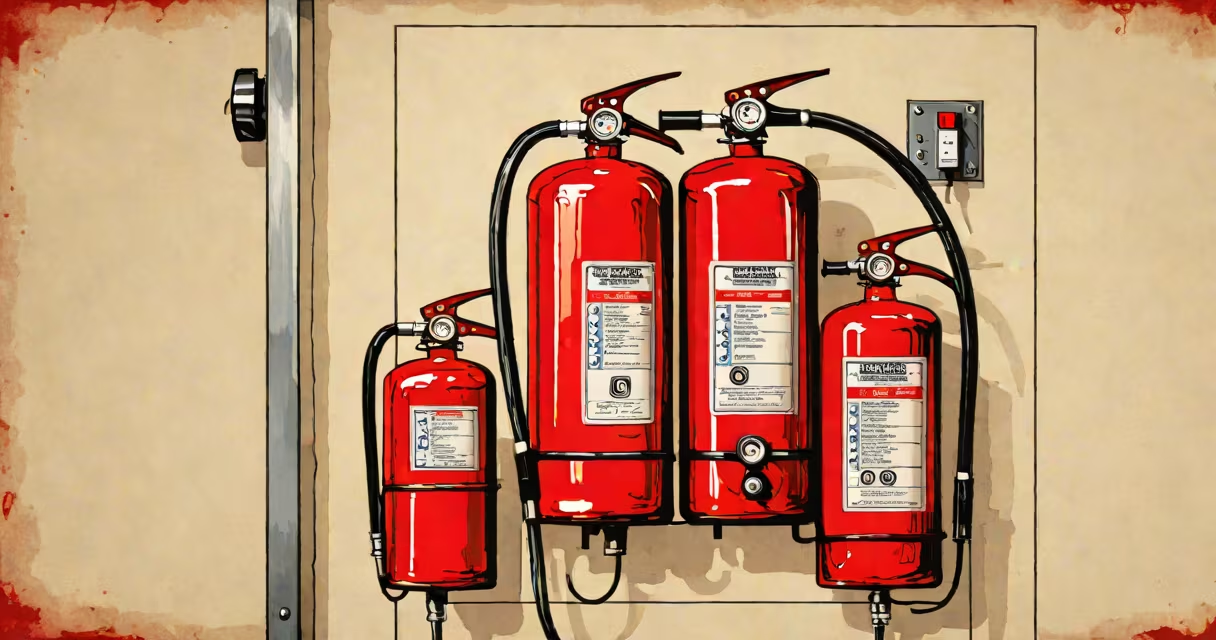
Electrical fire extinguishers, specifically Class C types, are portable fire suppression devices designed to extinguish fires involving live electrical equipment. They use a non-conductive extinguishing agent to safely smother electrical fires without conducting electricity.
Class C electrical fire extinguishers use either carbon dioxide (CO2) or dry chemical agents to suppress fires. CO2 extinguishers discharge carbon dioxide gas, which displaces oxygen around the electrical equipment, effectively smothering the flames. Dry chemical extinguishers release a fine powder that interrupts the chemical reaction of the fire.
There are two primary types of electrical fire extinguishers:
Electrical fire extinguishers are commonly found in environments with high electrical loads, such as server rooms, electrical panels, and laboratories. They are essential because water-based extinguishers conduct electricity and can cause electrocution or further damage.
Many people assume that any fire extinguisher can be used on electrical fires. However, using a water-based extinguisher on an electrical fire can be dangerous. Water conducts electricity, potentially causing severe injury or worsening the fire. Always use a Class C extinguisher for electrical fires.
In a data center, a power strip catches fire due to an overheated server. The facility's fire safety protocol dictates using a CO2 extinguisher to avoid damaging sensitive equipment. The technician grabs the nearest CO2 extinguisher, aims low at the base of the flames, and sweeps the nozzle until the fire is out. The CO2 extinguisher effectively smothers the fire without conducting electricity or leaving residue.