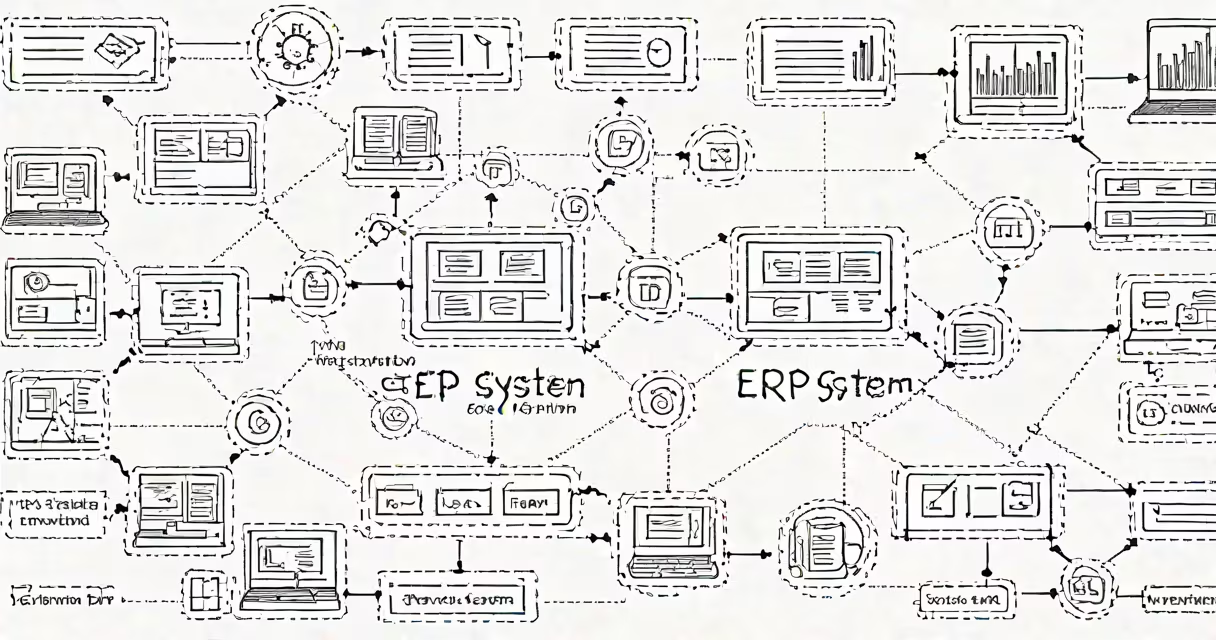
Enterprise Resource Planning (ERP) is business management software that integrates applications to automate back-office functions like finance, HR, and supply chain operations.
ERP systems centralize data into a single database and use modules to manage different business processes. When a user enters data in one module, it automatically updates related modules. For example, when sales enter an order, inventory levels update automatically, and accounting records the revenue.
Most ERP systems follow a tiered architecture:
Modern ERP systems typically include these core modules:
| Module | Function |
|---|---|
| Financial Management | General ledger, accounts payable/receivable, cash management |
| Human Capital Management | Payroll, benefits administration, talent management |
| Supply Chain Management | Procurement, inventory, warehouse management |
| Production planning, quality control, shop floor management | |
| Customer Relationship Management | Sales force automation, marketing automation, service management |
According to Gartner, 94% of enterprises use ERP systems to simplify operations and improve efficiency. The global ERP software market reached $41.7 billion in 2021 and continues growing at 10% annually.
Manufacturers use ERP to track production cycles and manage inventory. Retailers implement ERP to manage supply chains and point-of-sale systems. Service companies deploy ERP to track projects and bill clients.
Common misconception: ERP systems only benefit large enterprises. In reality, cloud-based ERP solutions have made them accessible to small and midsize businesses. For example, NetSuite offers scalable ERP solutions for businesses with as few as 10 employees.
While both manage customer data, ERP focuses on internal processes while CRM manages customer relationships. ERP systems track orders, inventory, and financials, while CRM systems track sales leads, marketing campaigns, and customer service interactions.
Many businesses integrate ERP and CRM systems to create a unified view of customers. For instance, Salesforce ERP integrates with Salesforce CRM to provide a complete customer lifecycle view.
One non-obvious fact: ERP systems often include built-in analytics capabilities. Modern ERP solutions provide dashboards and reporting tools that help businesses identify trends, track KPIs, and make data-driven decisions.
I once implemented an ERP system for a manufacturing client. We chose SAP S/4HANA for its real-time analytics and IoT integration capabilities. The system reduced production cycle times by 20% and improved inventory accuracy by 30%.