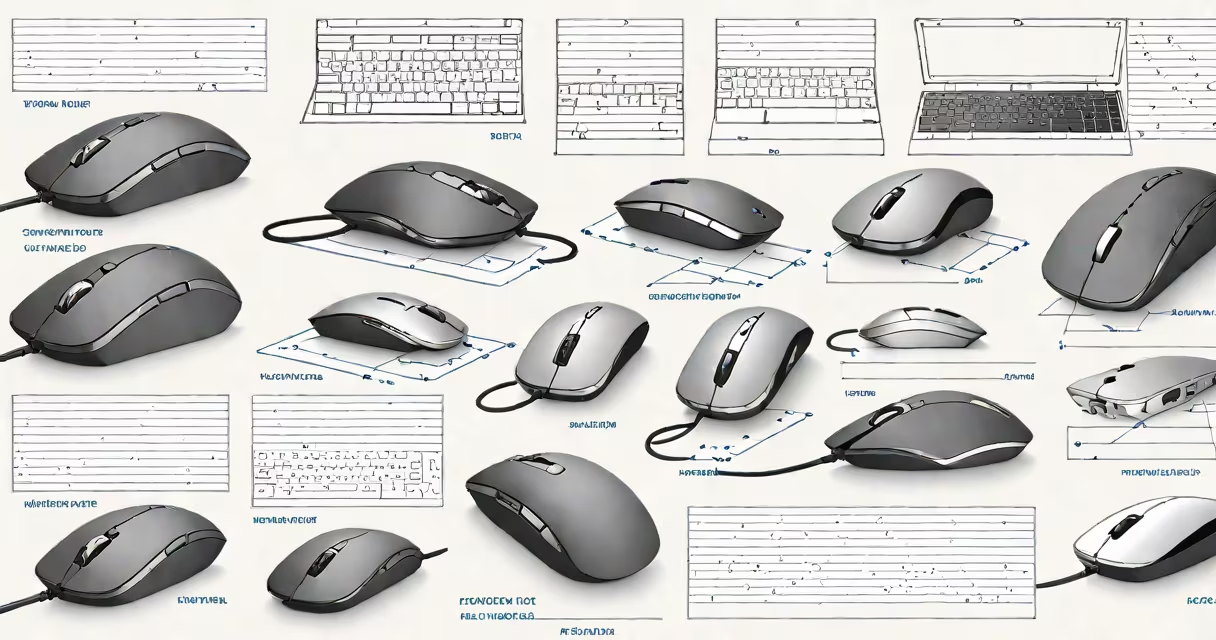
An ergonomic laptop mouse aims to reduce strain by supporting natural hand positions and minimizing awkward movements. These mice often feature vertical orientations, trackball designs, or built-in wrist rests to promote better posture and comfort during extended use.
Most standard mice force users into a pronated grip, where the forearm twists inward. Ergonomic designs address this by:
| Type | Key Feature | Example Product |
|---|---|---|
| Vertical | Upright orientation | Logitech MX Vertical |
| Trackball | Stationary with moving ball | Kensington Expert |
| Standard with Wrist Rest | Traditional shape with support | Microsoft Sculpt |
Ergonomic mice are particularly useful for:
A 2018 study in the Journal of Biomechanics found that vertical mice reduced forearm muscle activity by 15% compared to standard designs.
Many assume ergonomic mice are only for people with existing conditions. In reality, they benefit anyone who:
I tested a vertical mouse for two weeks and noticed less shoulder tension after long work sessions, even without pre-existing issues.
When selecting an ergonomic laptop mouse, consider: