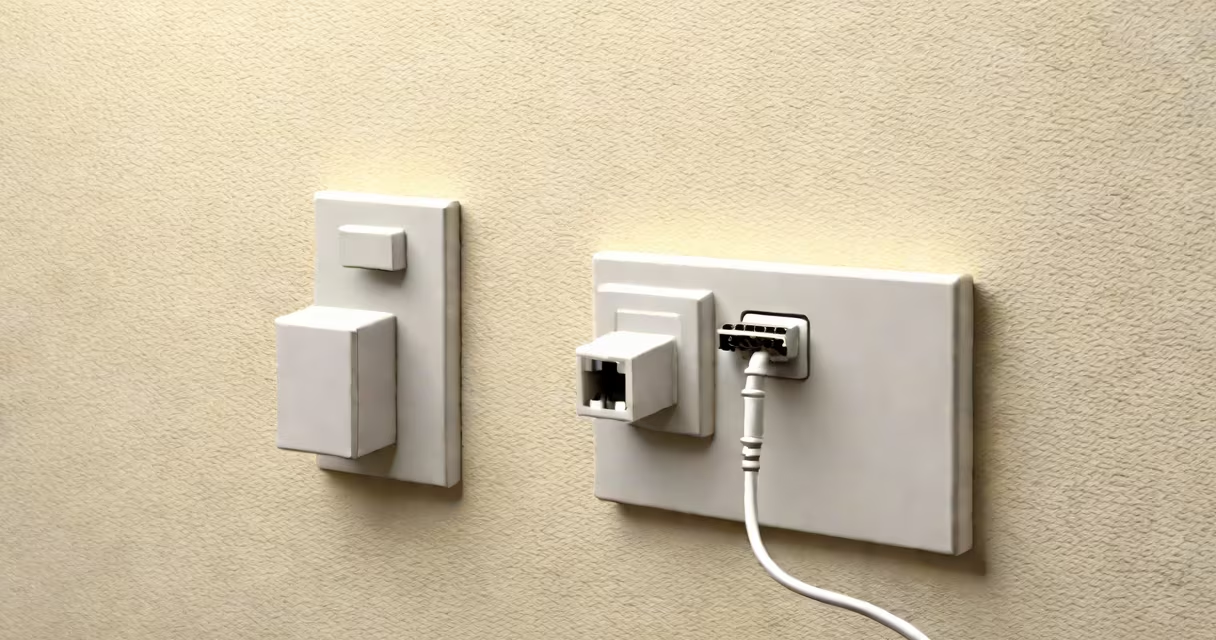
An ethernet phone line adapter converts telephone wiring into an ethernet connection, allowing you to extend your network using existing phone lines. These adapters work by translating ethernet signals into a format compatible with telephone wiring.
Ethernet phone line adapters use your home's existing telephone wiring to create a network connection. They convert ethernet signals into a format that can travel through phone lines and then reconvert them back to ethernet at the other end. This allows you to place an ethernet connection anywhere there's a phone jack, often reaching areas where running new ethernet cables is impractical.
The adapter typically consists of two main components: a transmitter and a receiver. The transmitter connects to your router via ethernet and sends data through the phone line. The receiver, plugged into a phone jack elsewhere in the house, retrieves the data and converts it back into an ethernet signal for your device.
| Type | Description | Use Case |
|---|---|---|
| Single-port adapter | Connects one device to the network via phone line | Extending internet to a single room |
| Multi-port adapter | Allows multiple devices to connect through one phone line | Setting up a small office or home network |
| Powerline adapter | Uses electrical wiring instead of phone lines | When phone jacks aren't available but electrical outlets are |
These adapters are useful in homes or offices where running new ethernet cables is difficult or impossible. For example, if you want to connect a device in a basement or attic where phone lines already exist but ethernet cables don't, an ethernet phone line adapter can solve the problem.
They're also cost-effective, as they use existing infrastructure rather than requiring new installations. However, their performance may be lower than direct ethernet connections due to signal degradation over long distances or poor-quality wiring.
Many people confuse ethernet phone line adapters with powerline adapters, which use electrical wiring instead of telephone lines. While both extend network connectivity using existing infrastructure, they operate on different principles and are not interchangeable.
Another misconception is that these adapters provide the same speed as direct ethernet connections. In reality, they often offer lower speeds due to signal interference and limitations of telephone wiring. For most basic internet activities like browsing or streaming, they work fine, but they may not be suitable for high-bandwidth tasks like online gaming or large file transfers.
I tested an ethernet phone line adapter in my home office to extend internet access to a room without ethernet ports. While it worked well for general web browsing and video streaming, I noticed slower speeds during large file downloads compared to a direct ethernet connection.