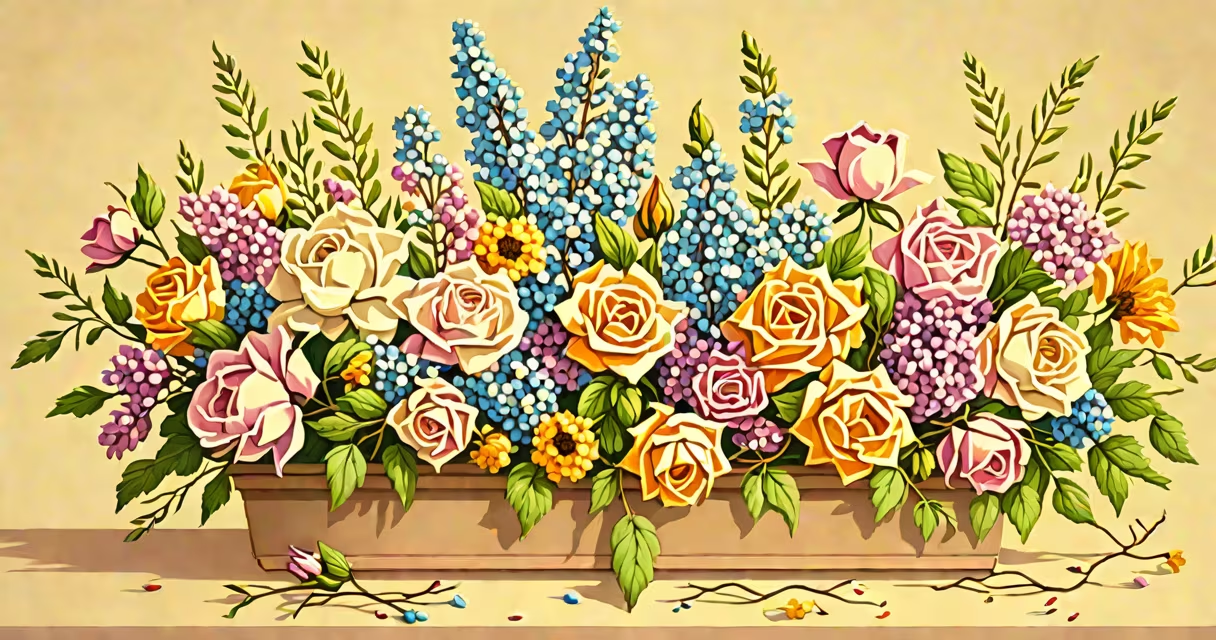
Flowers in the attic 1987 describes a popular style of vintage dried flower arrangements that emerged in the late 1980s. These arrangements typically feature muted colors, delicate textures, and a nostalgic aesthetic inspired by preserved flowers found in old attics.
The style takes its name from the 1987 novel Flowers in the Attic by V.C. Andrews, which sparked interest in gothic romance and vintage aesthetics. The arrangements mimic the look of flowers that have been naturally dried and preserved over time, often in soft pastel shades or earthy tones.
This style uses several key techniques:
These arrangements were popular in homes during the late 1980s and early 1990s, often displayed in living rooms, bedrooms, or offices. They were seen as a way to bring nature indoors while maintaining a vintage charm. Today, they remain a favorite among collectors and interior designers looking for a retro touch.
According to Britannica, dried flower arrangements have been used for centuries, but the 1987 trend was unique in its focus on recreating the look of forgotten, preserved blooms. The style was also influenced by the rise of gothic romance novels, which emphasized dark, moody interiors.
Many assume that these arrangements are simply old and decaying, but the best examples are carefully crafted using fresh flowers that are artificially aged for aesthetic effect. For instance, a well-made arrangement might use roses sprayed with a light brown dye to mimic natural fading.
To create a classic flowers in the attic 1987 arrangement, start with a mix of dried roses, baby's breath, and lavender. Arrange them loosely in a shallow basket or wooden box, allowing some stems to spill over the edges. Add a few dried leaves or twigs for texture. The result should look easily vintage, as if the flowers were discovered in an old attic.
I once created a similar arrangement for a friend's birthday. Using a mix of dried hydrangeas and eucalyptus, I arranged them in a vintage teacup. The muted blues and greens gave it an instantly nostalgic feel, and it became a conversation piece in her home.
Some confuse this style with modern dried flower arrangements, which often use bold, vibrant colors. Traditional flowers in the attic 1987 arrangements prioritize softness and subtlety, avoiding bright hues. Others mistake it for pressed flower art, which typically involves flattening flowers between pages of a book-a different technique entirely.