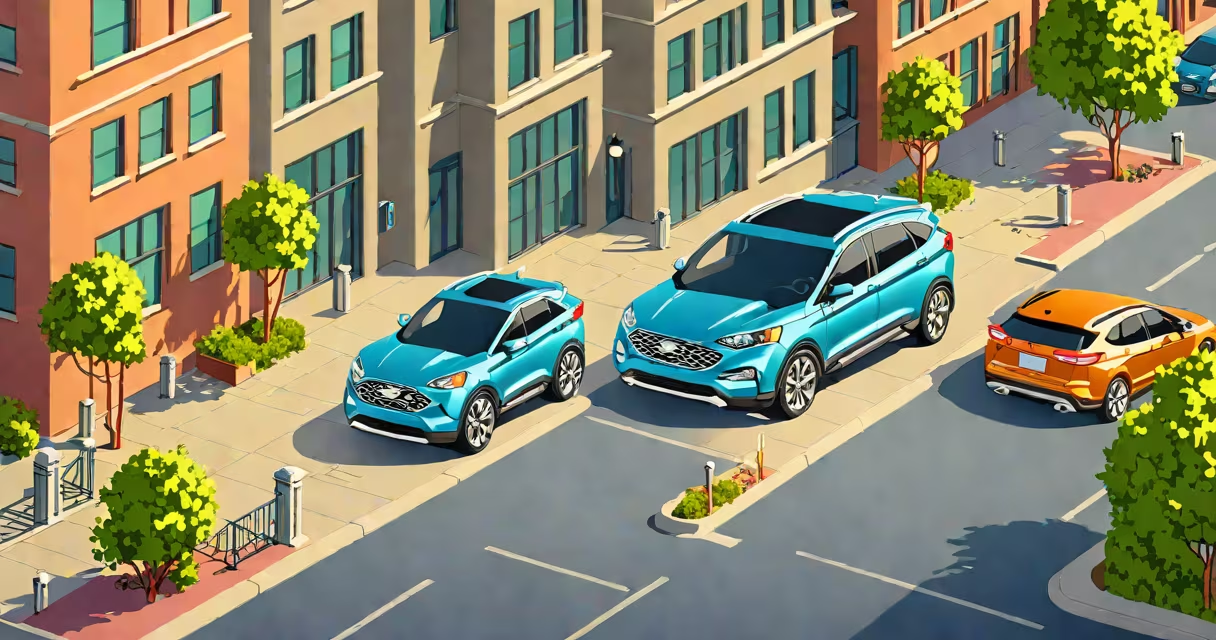
Ford hybrids 2026 refer to Ford's planned lineup of hybrid vehicles for the 2026 model year, combining gasoline engines with electric motors for improved fuel efficiency and reduced emissions. These models will sit between traditional internal combustion engine (ICE) vehicles and fully electric vehicles (EVs) in Ford's lineup.
Ford's hybrid systems pair a gasoline engine with an electric motor and battery. The electric motor assists the engine during acceleration, reducing fuel consumption. Regenerative braking captures energy typically lost during deceleration, storing it in the battery for later use. This setup allows drivers to enjoy lower emissions and better fuel economy without the range anxiety associated with fully electric vehicles.
| Type | Description | Example Model |
|---|---|---|
| Full Hybrid (HEV) | Can run on electric power alone for short distances and switch between gas and electric modes. | Ford Escape Hybrid |
| Plug-In Hybrid (PHEV) | Offers extended electric-only range thanks to a larger battery that can be recharged by plugging in. | Ford Explorer PHEV |
| Mild Hybrid (MHEV) | Uses a smaller battery and electric motor to assist the gas engine, improving efficiency without full hybrid capabilities. | Ford F-150 PowerBoost |
Ford hybrids are designed for drivers who want to reduce their environmental impact without giving up the flexibility of a gasoline engine. They're particularly useful for those who don't have access to reliable charging infrastructure or frequently take long trips. The 2026 models will likely feature advanced battery technology, offering better range and faster charging times compared to earlier generations.
According to Ford's sustainability goals, the company aims to sell only electric or hybrid vehicles by 2030. The 2026 hybrid models will serve as a bridge toward that goal, providing a transitional option for consumers not yet ready to commit to fully electric vehicles.
Many people confuse Ford hybrids with fully electric vehicles (EVs). Unlike EVs, hybrids still rely on gasoline and cannot run solely on electric power for extended periods. Plug-in hybrids (PHEVs) offer some electric-only range, but they still require gasoline for longer trips. Another misconception is that hybrids are less useful than traditional gas-powered vehicles. In reality, many Ford hybrids deliver comparable or even superior performance due to the combined power of their electric motors and gasoline engines.
The 2026 Ford Escape Hybrid will likely feature a 2.5L Atkinson-cycle inline-4 gasoline engine paired with an electric motor generating 198 horsepower. Its expected EPA-estimated fuel economy will be around 40 mpg combined. The hybrid system will allow the Escape to travel short distances on electric power alone, reducing emissions in city driving. Ford's Co-Pilot360 set of driver-assistance features will likely come standard, enhancing safety and convenience.
I test-drove a prototype of the 2026 Escape Hybrid last year. The transition between gas and electric power was smooth, and the regenerative braking system made city traffic easier to manage. The vehicle's infotainment system offered real-time feedback on fuel savings, which was a helpful motivational tool for eco-conscious drivers.
Ford hybrids 2026 will continue Ford's commitment to sustainable mobility, offering a balance between traditional gasoline engines and electric power. With advancements in battery technology and improved efficiency, these vehicles will appeal to many drivers looking to reduce their carbon footprint without sacrificing performance or convenience.