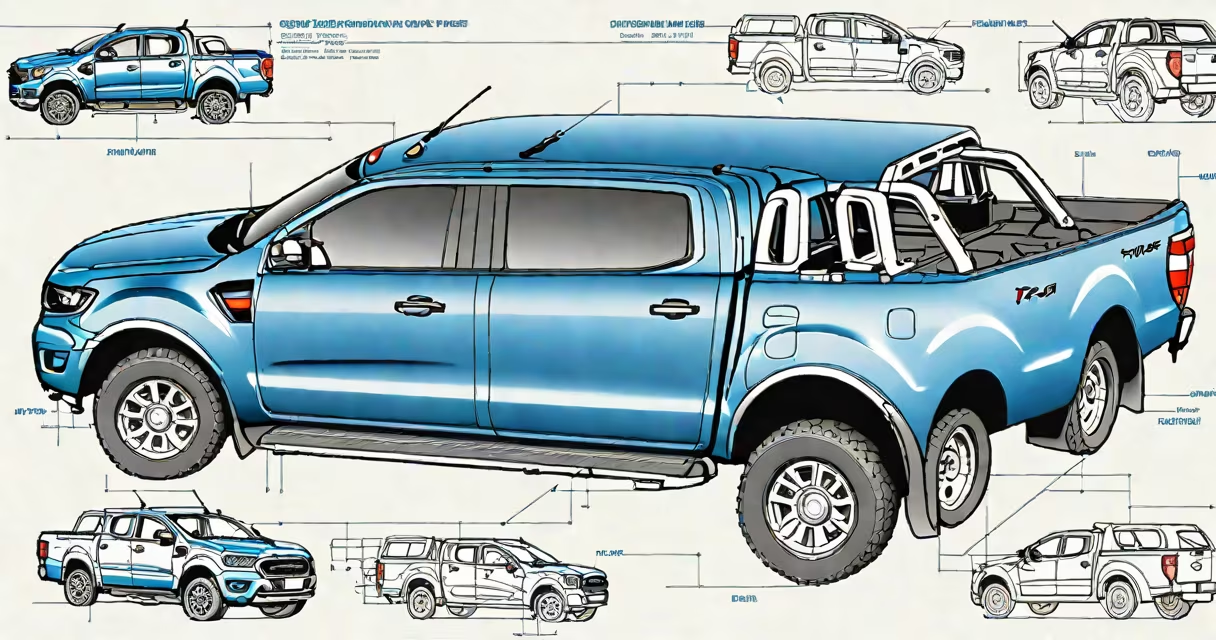
The Ford Ranger's fuel economy averages 21 miles per gallon (mpg) in city driving and 26 mpg on highways, depending on the engine and drivetrain. The 2.3L EcoBoost turbocharged four-cylinder is the only powertrain available in the U.S. market.
The Ranger's efficiency places it between compact crossovers and larger trucks. For context, the 2026 Ford Ranger Lariat with its 2.3L EcoBoost engine achieves slightly better highway ratings than the Toyota Tacoma's 3.5L V6 (20 city/26 highway), though the Tacoma offers more torque for towing.
Three variables impact the Ranger's real-world fuel economy:
Many buyers assume the Ranger's diesel engines (available in other markets) are standard in the U.S., but Ford only offers the 2.3L EcoBoost. Diesel versions in Australia and Europe achieve up to 28 mpg combined, but U.S. buyers must rely on the turbocharged gasoline engine.
Another myth is that the Ranger's mpg is worse than competitors like the Chevy Colorado. However, the Colorado's 2.5L inline-four matches the Ranger's 21 city/26 highway ratings.
During a 500-mile highway trip in a 2023 Ranger XLT with RWD, my average was 25 mpg. This fell short of the EPA's 26 mpg rating due to mountain roads and frequent stops. The trip computer confirmed the drop, showing 23 mpg in hilly terrain.