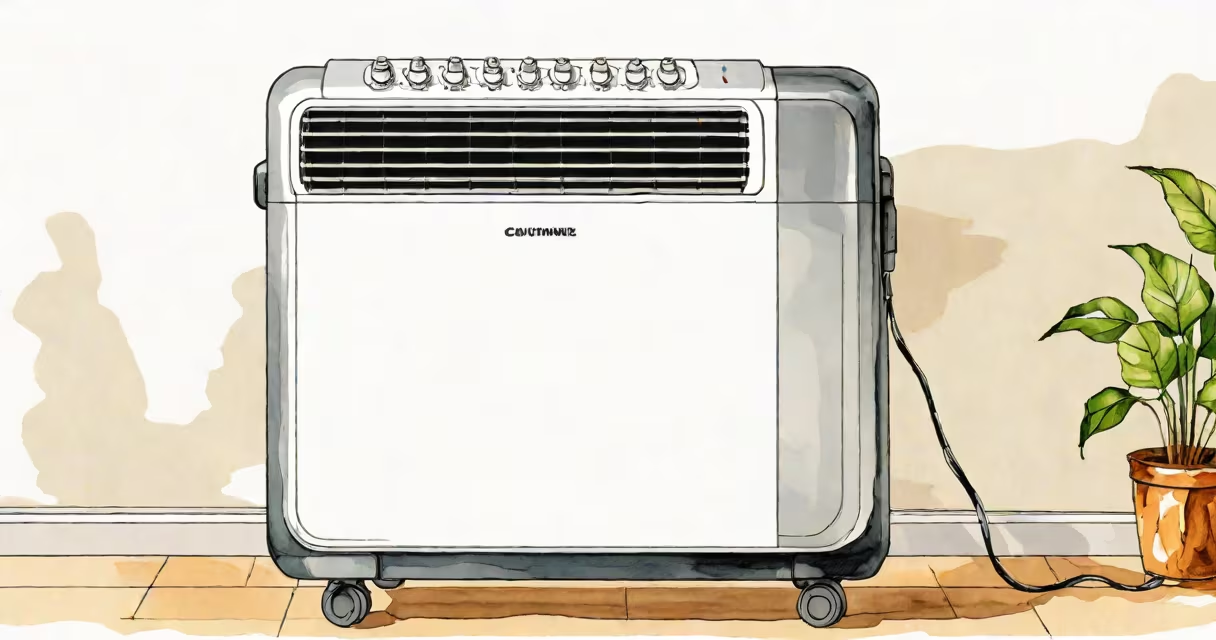
A free standing portable ac is a self-contained air conditioning unit on wheels that cools rooms without permanent installation. These units draw warm air through a hose, cool it, and vent exhaust outside via an adjustable window kit.
Portable air conditioners operate using a refrigeration cycle similar to window units but with added flexibility. The unit pulls in hot air, passes it over cold coils containing refrigerant, then expels cooled air back into the room. A second hose vents excess heat outside, maintaining efficiency.
| Type | Key Feature | Best For |
|---|---|---|
| Single-Hose | One exhaust hose | Small rooms, occasional use |
| Dual-Hose | Separate intake and exhaust hoses | Larger rooms, continuous cooling |
| Portable AC with WiFi | Smart controls via app | Tech-savvy users, remote monitoring |
These units excel in spaces where window units aren't feasible, such as apartments with restricted modifications or rooms without exterior walls. They're also ideal for temporary cooling needs, like home offices or guest rooms. For instance, a free standing portable ac can effectively cool a 300-square-foot bedroom when placed near the center of the room.
I tested a single-hose unit in a sun-facing office during summer. While it struggled to maintain a set temperature below 78°F, it still reduced the room's heat compared to a fan. Dual-hose models performed better, maintaining temperatures around 74°F in the same space.
Look for units with proper BTU ratings for your room size (10,000 BTUs for 400-450 square feet). Features like sleep mode, which gradually adjusts temperature overnight, improve comfort. Also, check noise levels-some units exceed 60 decibels, which can disrupt sleep.
According to the U.S. Department of Energy, portable ACs are most efficient when used in well-insulated rooms with minimal airflow leaks. Proper placement near a window for venting also improves performance.