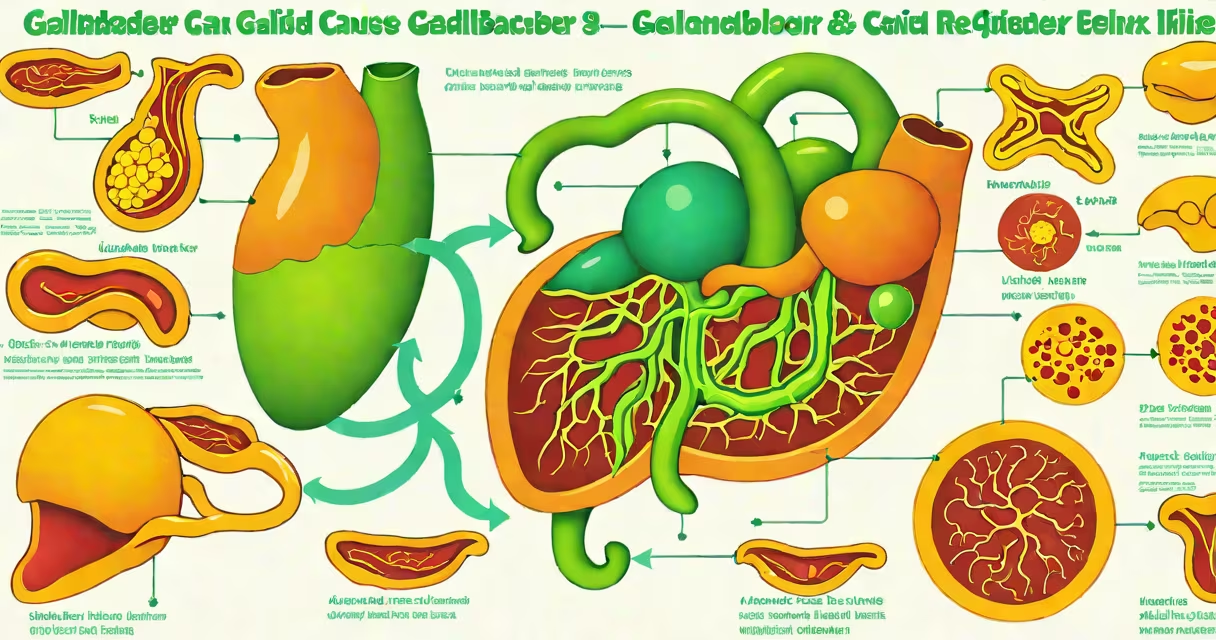
The gallbladder causes acid reflux when bile flows backward into the stomach, overwhelming its natural defenses. This happens most often after gallbladder removal surgery or due to gallstones blocking normal bile flow.
The gallbladder stores bile produced by the liver and releases it into the small intestine to aid digestion. A healthy gallbladder acts as a one-way valve, preventing bile from re-entering the stomach. When this system fails, bile can irritate the stomach lining and trigger acid reflux symptoms.
Two primary conditions lead to gallbladder-related acid reflux:
While gallbladder-induced reflux shares common symptoms with regular acid reflux-like burning chest pain and regurgitation-it often includes additional digestive issues:
Doctors diagnose gallbladder-related reflux through medical history, physical exams, and tests like ultrasounds or HIDA scans. Treatment options include:
| Condition | Treatment Approach |
|---|---|
| Post-cholecystectomy syndrome | Proton pump inhibitors (PPIs) or bile acid sequestrants |
| Gallstone obstruction | ERCP procedure to remove stones or surgery |
I noticed this pattern in patients after observing how gallbladder removal often led to persistent reflux symptoms that didn't respond to standard treatments. The key difference was the constant presence of bile in the stomach rather than occasional acid backup.
To minimize risks: