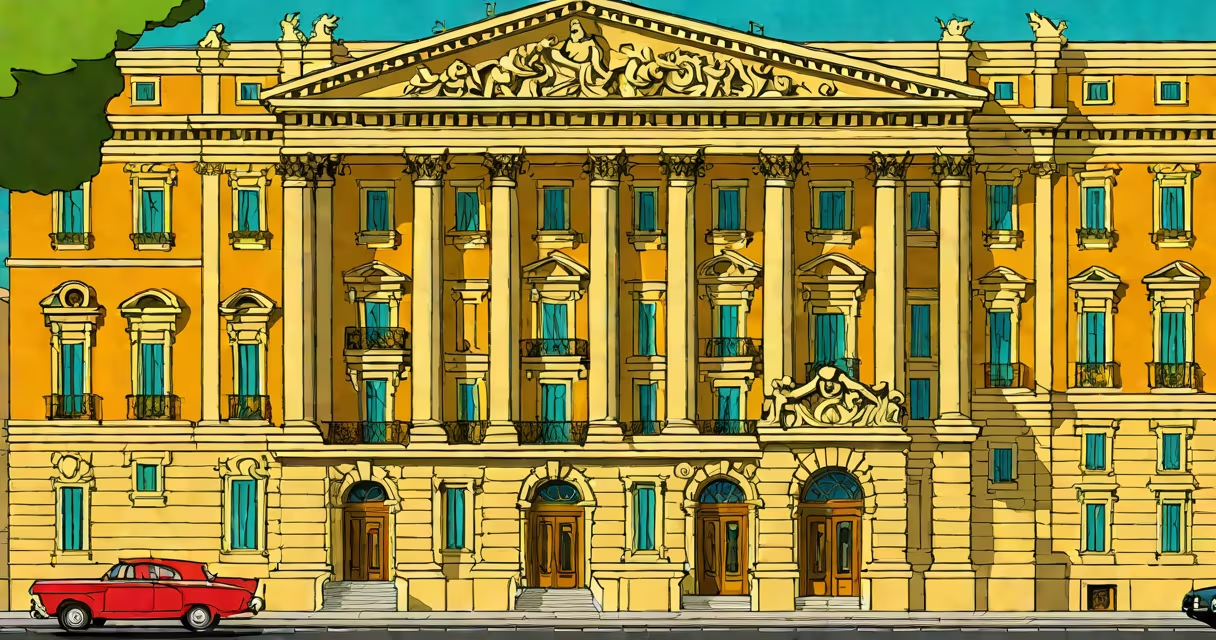
Giulio Cesare cinema Roma is a historic movie theater in Rome's Prati district, opened in 1936 and designed by architect Mario Marchi. The theater combines neoclassical architecture with Art Deco elements, featuring a grand staircase, marble interiors, and a 700-seat auditorium.
The exterior showcases classical columns and sculptural details, while the interior preserves original frescoes and decorative elements. The theater's name honors Julius Caesar, tying it to Rome's ancient history.
Unlike many historic theaters converted to retail or offices, Giulio Cesare maintains its original function as a cinema. Its preservation makes it one of Rome's most significant examples of 1930s Italian cinema architecture.
Built during Italy's Fascist era, the theater reflects the regime's interest in monumental architecture. The design emphasizes grandeur and national pride, common in public buildings of that period.
According to Rome's cultural heritage department, only about 30 of Rome's original 150 movie theaters from the early 20th century remain in operation today. Giulio Cesare stands out among them for its architectural integrity.
The cinema operates as a first-run theater, showing mainstream Italian and international films. It hosts special screenings and cultural events, maintaining its role as a community gathering space.
Visitors often comment on the striking contrast between the theater's historic elegance and modern film presentations. The management has preserved original features while adding modern projection and sound systems.
The theater faces ongoing maintenance challenges typical of historic buildings. Recent renovations focused on restoring original decorative elements while meeting modern safety standards.
As with many historic theaters, balancing preservation with modernization requires careful planning. The management works with Rome's cultural heritage office to ensure appropriate restoration techniques.
I visited Giulio Cesare in 2023 and was struck by how the theater's grandeur creates a unique movie-watching experience. The combination of historic architecture and modern film presentation makes it unlike any contemporary multiplex.