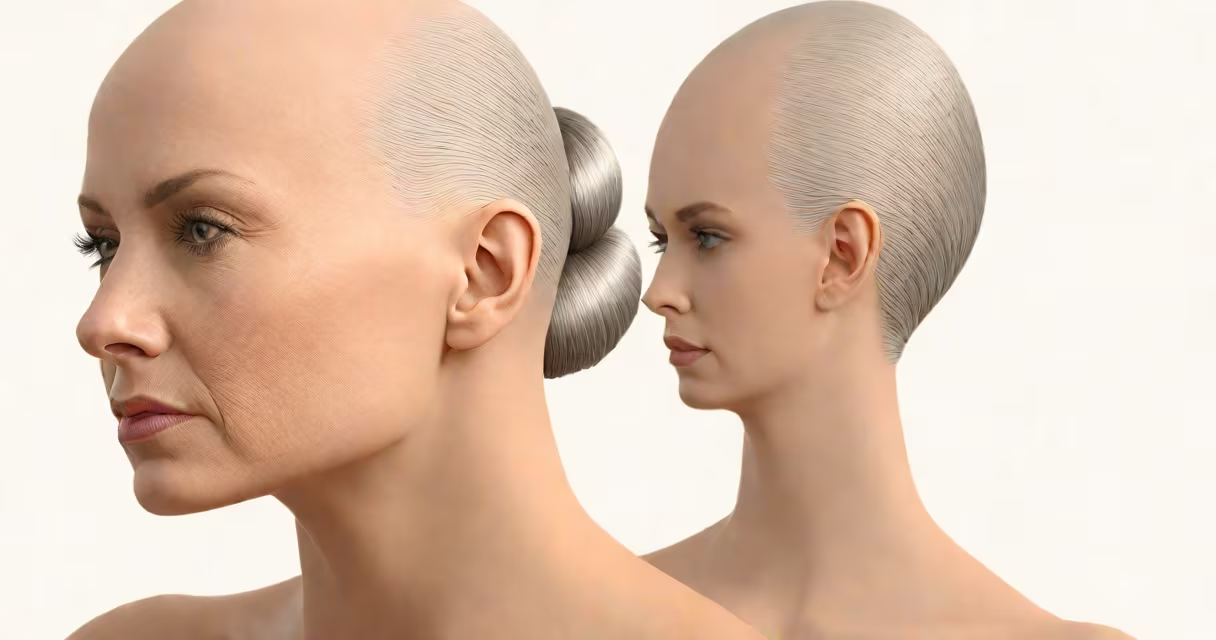
Going bald woman refers to female pattern hair loss, a condition where women experience noticeable hair thinning or bald patches. Unlike men, women typically develop diffuse thinning across their scalps rather than receding hairlines.
In men, hair loss often follows a predictable pattern: receding hairlines and bald spots on the crown. Women, however, usually experience gradual thinning over the entire scalp while maintaining their frontal hairline. This difference is due to varying hormone sensitivities and genetic factors between genders.
| Type | Description | Common Causes |
|---|---|---|
| Female Pattern Hair Loss (FPHL) | Gradual thinning over the top and crown of the scalp | Genetics, hormonal changes, aging |
| Alopecia Areata | Patchy hair loss anywhere on the scalp | Autoimmune disorder |
| Telogen Effluvium | Temporary thinning due to shock or stress | Pregnancy, surgery, illness, significant stress |
Female pattern hair loss is primarily caused by a combination of genetic predisposition and hormonal changes. Unlike men, women produce lower levels of androgens (male hormones), but fluctuations in estrogen and progesterone during menopause or pregnancy can trigger hair loss. Other contributing factors include:
Female pattern hair loss is classified into three stages based on the Ludwig Scale:
Unlike male pattern baldness, female hair loss rarely progresses to complete baldness. Most women maintain their frontal hairline but experience noticeable thinning over time.
While there is no cure for female pattern hair loss, several treatments can slow its progression or promote regrowth:
If you notice sudden or patchy hair loss, consult a healthcare provider. Conditions like alopecia areata or telogen effluvium may require different treatments. A dermatologist can diagnose the underlying cause and recommend appropriate interventions.
I noticed my hair thinning in my late 20s, which led me to explore treatments like minoxidil and PRP therapy. While results vary, combining treatments with a healthy lifestyle can make a difference.
Going bald woman is a common concern, but understanding the causes and available treatments can help manage the condition effectively. Early intervention often yields the best results, so consulting a healthcare provider is recommended.