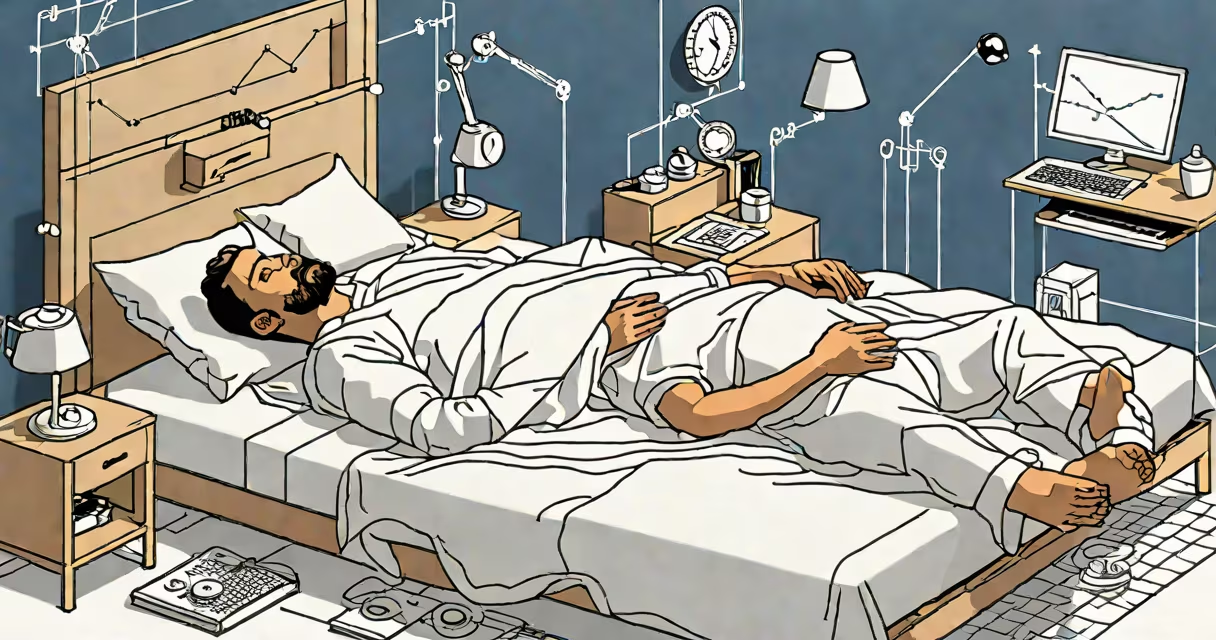
Guided visualization for sleep is a relaxation technique that involves creating calming mental images to ease the mind into restfulness. By focusing on serene scenarios, practitioners reduce stress and prepare their bodies for sleep.
This method works by shifting attention away from daily stressors and toward peaceful imagery. The brain interprets these visualizations as real experiences, triggering physiological responses like lowered heart rate and muscle relaxation. Research from the National Institutes of Health shows that guided imagery can improve sleep quality.
Guided visualizations for sleep typically fall into three categories:
To begin, find a quiet space and lie down comfortably. Close your eyes and take slow, deep breaths. Start by picturing a place where you feel utterly at peace. Engage all your senses-imagine the sounds, smells, and textures of this environment. Spend 5-10 minutes in this imagined space, allowing your body to relax fully.
Some believe guided visualization requires extensive imagination or artistic skills. In reality, even simple, abstract images can be effective. The key is consistency and focus, not creativity.
Another myth is that visualization replaces other sleep aids. While useful, it works best as part of a broader sleep hygiene routine, including consistent bedtimes and a dark, cool environment.
A study published in JAMA Internal Medicine found that mindfulness-based techniques, including guided imagery, improved sleep quality in chronic insomnia patients. The technique was as effective as prescription sleep aids for some participants.
I've used guided visualization before bedtime and noticed a significant reduction in my time to fall asleep. By focusing on a quiet lake scene, I felt more relaxed within minutes.