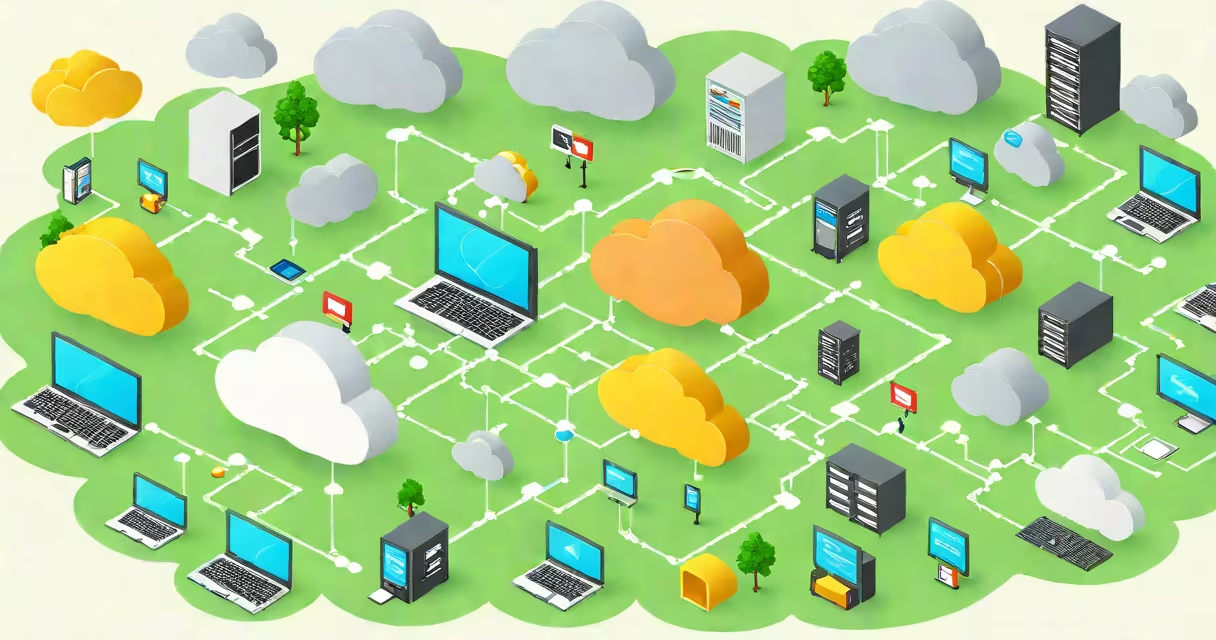
Hadoop and cloud computing combine big data processing with scalable infrastructure, enabling distributed computing across virtualized cloud environments.
Hadoop is an open-source structure for distributed storage and processing of large datasets. It uses a cluster of computers to divide work, improving efficiency and reliability. When integrated with cloud computing, Hadoop leverages virtual machines and cloud storage to scale resources dynamically. This setup allows organizations to handle vast amounts of data without investing in physical hardware.
The core components of Hadoop include:
These components work together to process data efficiently, even when deployed in a cloud environment.
| Type | Description | Use Case |
|---|---|---|
| Public Cloud | Shared cloud infrastructure provided by third-party vendors like AWS, Google Cloud, and Microsoft Azure. | Cost-effective for small to medium-sized enterprises needing flexible resources. |
| Private Cloud | Dedicated cloud infrastructure used exclusively by a single organization. | Ideal for enterprises with strict data security and compliance requirements. |
| Hybrid Cloud | Combination of public and private clouds, allowing data and applications to move between them. | Provides flexibility and optimization for varying workloads and data security needs. |
Cloud computing enhances Hadoop's capabilities by providing scalable resources, reducing costs, and improving accessibility. For instance, a retail company can use Hadoop in the cloud to analyze customer purchase patterns in real-time, optimizing inventory management and marketing strategies. The cloud's elasticity allows the company to scale resources during peak shopping seasons and reduce them during slower periods, saving costs.
Many people confuse Hadoop with traditional databases. Unlike relational databases, Hadoop is designed for unstructured data, such as social media posts, images, and videos., Hadoop is often mistaken for a standalone solution, but it thrives when integrated with other tools and platforms, especially cloud services.
Netflix uses Hadoop in the cloud to process vast amounts of viewer data, improving recommendation algorithms and content delivery. By using cloud computing, Netflix can scale its infrastructure to handle millions of users simultaneously, ensuring a smooth streaming experience.
Hadoop and cloud computing together provide a useful solution for big data processing, offering scalability, cost-efficiency, and enhanced performance. By integrating Hadoop with cloud services, organizations can use distributed computing to handle large datasets effectively, driving innovation and improving decision-making processes.