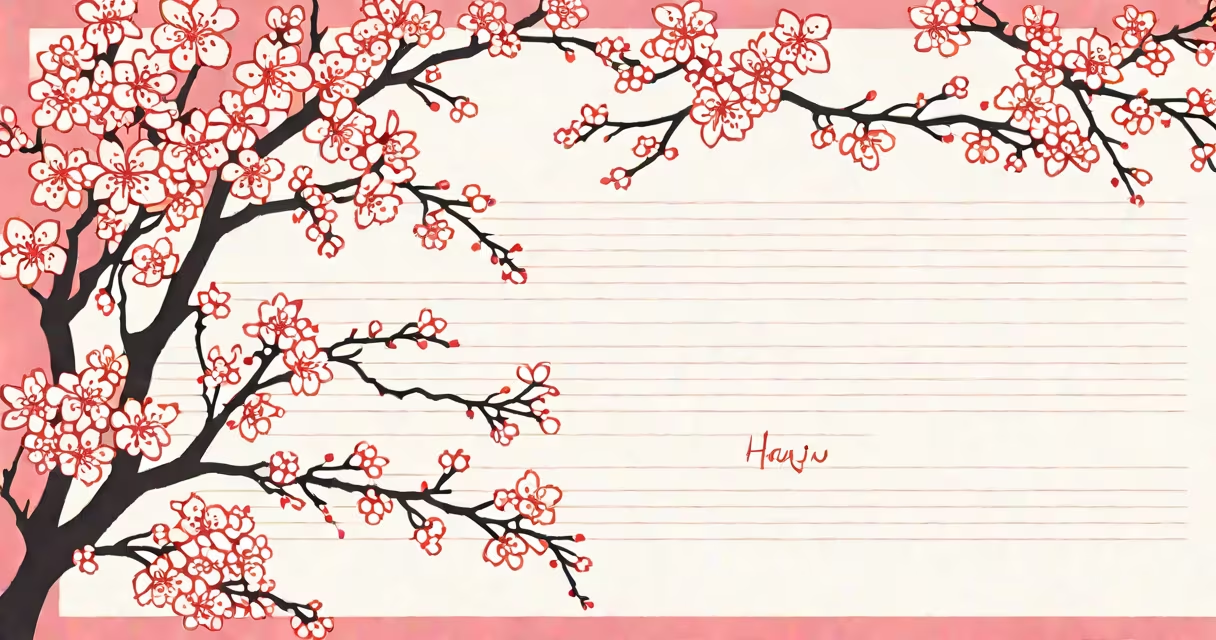
A haiku poem format consists of three lines with a 5-7-5 syllable structure and a seasonal reference. This traditional Japanese poetry form captures fleeting moments in nature.
Haiku focuses on simplicity and direct observation. The 5-7-5 syllable pattern creates a concise structure, while the seasonal reference (kigo) grounds the poem in nature. Unlike Western poetry, haiku avoids rhyme and complex metaphors.
While all haiku follow the 5-7-5 structure, they can be categorized by their seasonal focus:
| Season | Example Kigo | Example Haiku |
|---|---|---|
| Spring | cherry blossoms | Cherry blossoms fall- a fleeting beauty on the garden path |
| Summer | cicadas | Cicadas scream through the hot summer night- no relief in sight |
| Autumn | falling leaves | Falling leaves dance in the crisp autumn breeze- winter approaches |
| Winter | snowflakes | Snowflakes gently fall covering the frozen earth- silence prevails |
Many assume haiku are always about nature, but they can explore human emotions if tied to a seasonal reference. Another myth is that haiku must include a kigo explicitly-sometimes the season is implied. For example, a haiku about "frost" implies winter without stating it directly.
Haiku forces poets to distill observations into their essence. This discipline fosters mindfulness and appreciation for small details. The form's brevity makes it accessible yet profound, offering a snapshot of a moment in time.
In my experience teaching haiku workshops, participants often struggle with the 5-7-5 constraint at first. However, once they embrace the challenge, they discover new ways to observe and articulate the world around them.
The haiku poem format remains relevant because of its simplicity and universality. Whether capturing a moment in nature or expressing a fleeting emotion, haiku invites us to pause and reflect on the world's beauty.