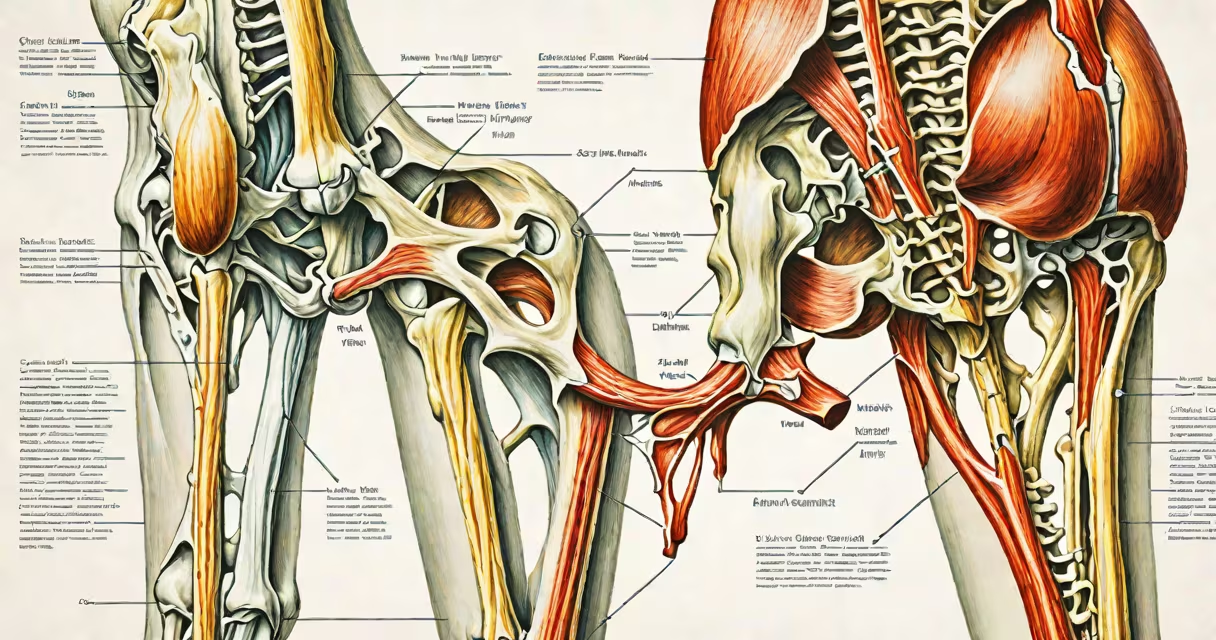
The hip flexor joint is the ball-and-socket connection between your femur (thighbone) and pelvis, stabilized by muscles and ligaments that lift your knee toward your chest. It enables movement like walking, running, and sitting.
The joint's primary movers are the iliopsoas (a pairing of the psoas major and iliacus muscles) and rectus femoris, part of the quadriceps. These muscles contract to flex the hip, pulling the knee upward. The joint's stability comes from ligaments like the iliofemoral ligament, which prevents excessive motion.
When you walk, your hip flexors propel your leg forward while stabilizing your core. During a soccer kick, they generate force by rapidly shortening. Overuse or tightness often leads to discomfort, especially in sedentary individuals who sit for long periods.
The system includes:
A 2020 study in the Journal of Bodywork and Movement Therapies found that prolonged sitting shortens the iliopsoas, reducing its force-generating capacity. This explains why office workers often report stiffness.
To assess flexibility, try the Thomas test: Lie on your back, pull one knee to your chest, and observe if the other leg lifts off the bed. If it does, tight hip flexors may be present.
For strength testing, perform a seated knee raise. Weakness here suggests muscle imbalances requiring targeted exercises.
Regular stretching and strengthening routines help maintain balance. For example, the kneeling hip flexor stretch targets the iliopsoas directly. Strengthening the glutes and core reduces strain on the hip flexors during movement.