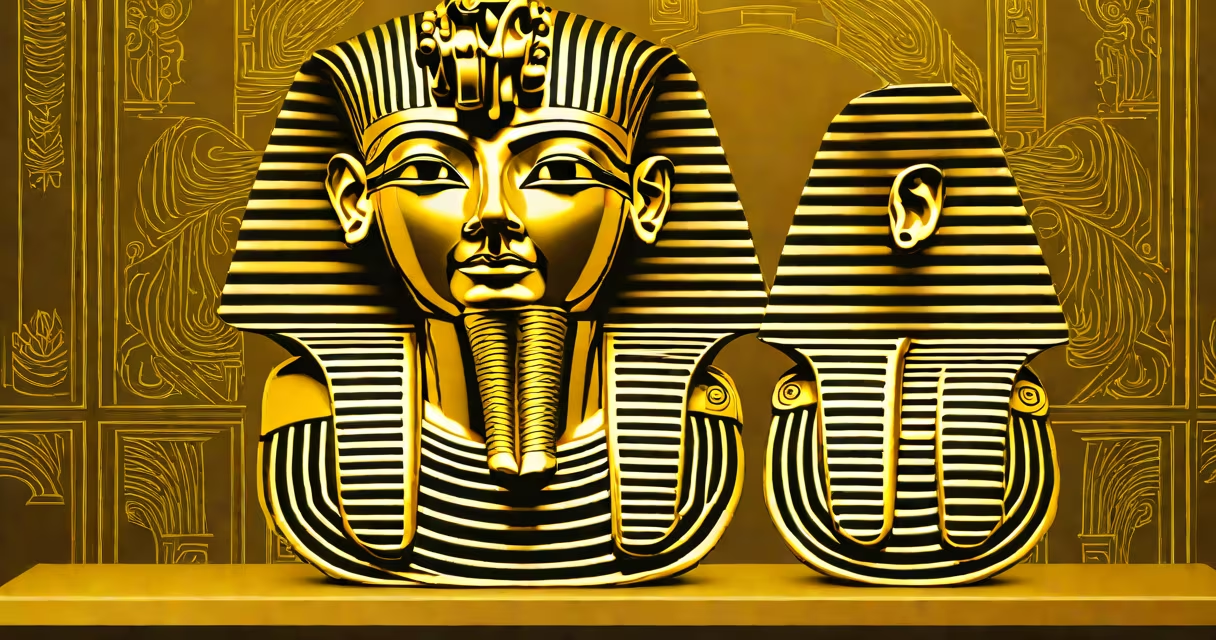
Tutankhamun, the famous Boy King of ancient Egypt, died around age 19 due to likely a combination of factors including physical impairments and infection, according to modern forensic analysis.
Several theories attempt to explain Tutankhamun's premature death. The most widely accepted theory suggests he suffered from a combination of health issues exacerbated by a leg fracture. This theory gained traction after CT scans revealed evidence of a left thigh bone fracture, possibly from a fall. The scans also showed signs of knee infections and congenital health problems.
Other theories propose Tutankhamun was murdered, possibly by a blow to the head. However, the evidence supporting this claim is inconclusive. Some researchers argue that the fracture in his skull was likely caused by the mummification process rather than violence.
In 2005, a team of researchers led by Dr. Zahi Hawass conducted a CT scan of Tutankhamun's mummy. The scan revealed that the king had several health issues, including a cleft palate, club foot, and possible signs of Marfan syndrome, a genetic disorder that affects the body's connective tissue. These conditions likely contributed to his frail health and susceptibility to infections.
The scan also showed that Tutankhamun's mummy was missing its heart, which was traditionally removed during the mummification process and placed in the Canopic jar. However, Tutankhamun's heart was never found in the jar, leading to speculation about its significance in ancient Egyptian beliefs.
Tutankhamun ascended to the throne at the age of nine and ruled Egypt during a period of political and religious turmoil. His reign marked a return to traditional Egyptian religion after the controversial reign of his father, Akhenaten, who promoted the worship of the sun god Aten. Tutankhamun's short reign ended abruptly, and his death left a power vacuum that was eventually filled by his successors.
Despite his brief reign, Tutankhamun's tomb, discovered by Howard Carter in 1922, became one of the most significant archaeological finds of the 20th century. The tomb's well-preserved artifacts and the iconic gold death mask have captivated the public imagination and sparked ongoing research into the life and death of the Boy King.
One common misconception is that Tutankhamun was killed by a curse. This idea gained popularity after several members of the expedition team died shortly after the tomb's discovery. However, there is no scientific evidence to support the existence of a curse, and the deaths were likely coincidental.
Another misconception is that Tutankhamun's death was solely due to murder. While the possibility of foul play cannot be entirely ruled out, the evidence points more strongly toward natural causes exacerbated by health issues and a possible accident.
The mystery of Tutankhamun's death remains one of the most intriguing puzzles in archaeology. While modern forensic techniques have provided valuable insights, the exact cause of his death may never be fully known. The combination of health issues, a possible leg fracture, and infections likely played a role in the Boy King's untimely demise. As research continues, we may uncover more details about the life and death of this enigmatic pharaoh.