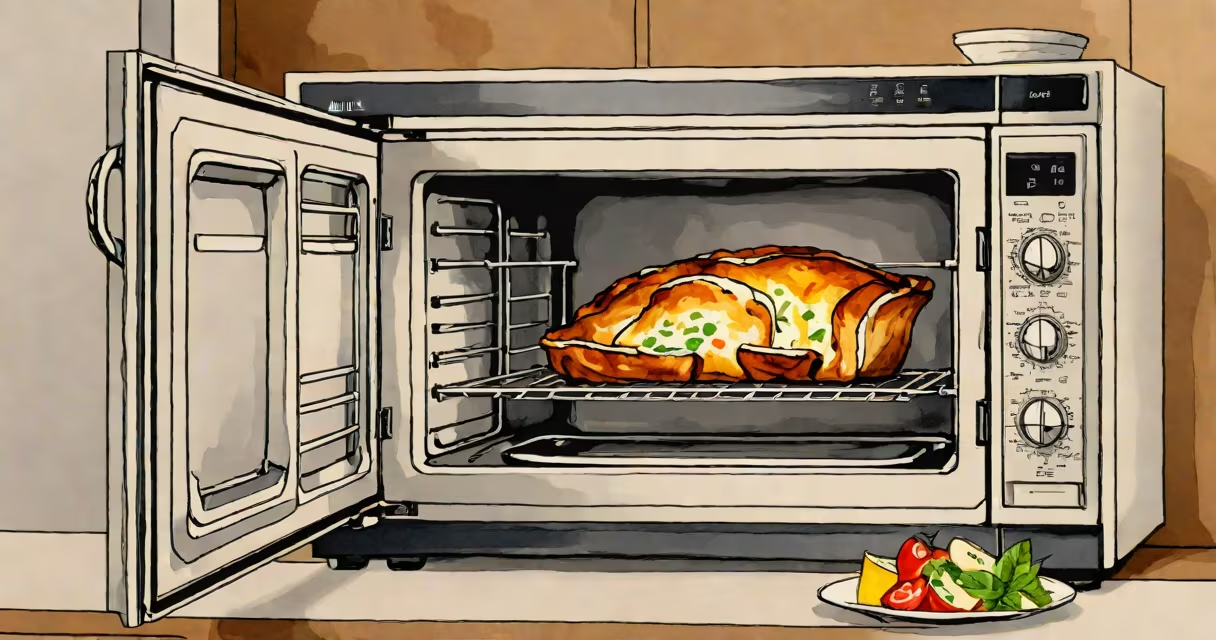
A convection microwave is a hybrid kitchen appliance that combines standard microwave technology with convection cooking. It uses microwave radiation to heat food while simultaneously circulating hot air with a built-in fan.
Convection microwaves operate using two key mechanisms: microwave radiation and convection airflow. The microwave component generates electromagnetic waves that agitate water molecules in food, producing heat. Meanwhile, the convection element uses a heating element and fan to circulate hot air around the food, promoting even browning and crisping.
The appliance switches between these modes automatically or manually, depending on the model. Some units use both functions simultaneously, while others alternate between them. This dual-function design allows for faster cooking times and better results for certain dishes compared to traditional microwaves.
| Type | Key Feature | Best For |
|---|---|---|
| Solo Convection Microwave | Microwave function only | Basic reheating and defrosting |
| Grill Convection Microwave | Adds a grill element | Grilling and searing |
| Combination Convection Microwave | Combines microwave, convection, and grill functions | Versatile cooking, including baking and roasting |
Convection microwaves excel at tasks that require both speed and browning, such as cooking pizza, baking cookies, or roasting vegetables. They also perform well for reheating leftovers, as the convection function helps restore crispness to foods like fried chicken or french fries.
One non-obvious benefit is energy efficiency. Because convection microwaves cook food faster and more evenly, they often use less energy than conventional ovens for similar tasks. According to the U.S. Department of Energy, they can reduce cooking time by up to 30% compared to traditional ovens.
While both appliances use convection technology, they serve different purposes. Air fryers specialize in frying-like results with little to no oil, while convection microwaves offer more versatility, including microwave functions. Air fryers typically have a smaller capacity and focus on high-heat cooking, whereas convection microwaves provide a broader range of cooking options.
I tested a convection microwave side by side with an air fryer to cook frozen mozzarella sticks. The convection microwave produced evenly cooked sticks with a crisp exterior in about half the time it took the air fryer. However, the air fryer achieved a slightly crunchier texture.
Convection microwaves may not be suitable for all cooking tasks. Delicate foods that require gentle heating, such as custards or soufflés, can be challenging to prepare., the learning curve for mastering the various settings and functions can be steep for some users.
Another consideration is cost. Convection microwaves typically price higher than traditional microwaves due to their advanced features. However, the long-term savings on energy bills and the added convenience may justify the investment for many households.