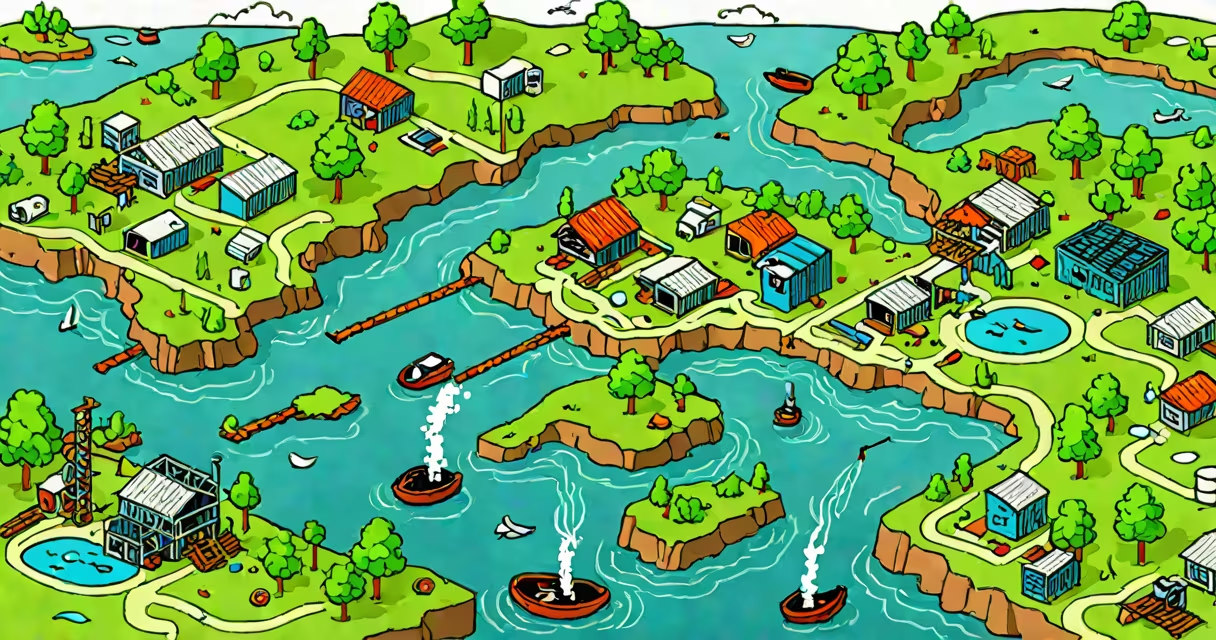
Humans cause water pollution through direct discharges and indirect runoff, introducing harmful substances into water bodies. These actions stem from industrial activities, agricultural practices, urban development, and daily habits.
Direct sources release pollutants straight into waterways. Factories often discharge untreated wastewater containing heavy metals, chemicals, and toxins. Sewage treatment plants can overflow during heavy rains, releasing untreated sewage into rivers and oceans. Oil spills from ships and offshore drilling also contribute.
For example, the 2010 Deepwater Horizon oil spill released approximately 4.9 million barrels of oil into the Gulf of Mexico, devastating marine life and coastal ecosystems.
Indirect sources involve pollutants entering water bodies through runoff. Agricultural fields use fertilizers and pesticides that wash into nearby rivers and lakes, causing algal blooms and fish kills. Urban areas contribute through stormwater runoff carrying trash, chemicals, and heavy metals from roads and rooftops.
According to the Environmental Protection Agency (EPA), agricultural runoff is the leading cause of water quality issues in rivers and streams.
| Pollutant Type | Sources | Effects |
|---|---|---|
| Nutrients (nitrogen, phosphorus) | Agricultural runoff, sewage | Algal blooms, oxygen depletion |
| Heavy metals (lead, mercury) | Industrial discharge, mining | Toxicity to aquatic life, bioaccumulation |
| Pathogens (bacteria, viruses) | Sewage, animal waste | Waterborne diseases |
| Plastics and microplastics | Trash, synthetic fibers | Ingestion by marine life, contamination |
Many believe that water pollution primarily results from large-scale industrial accidents. While these events contribute, everyday activities like using household chemicals, littering, and improper waste disposal also play significant roles. For instance, washing your car in the driveway can send soapy water and debris into storm drains, eventually polluting local water bodies.
Reducing water pollution requires collective effort. Properly disposing of hazardous waste, using eco-friendly products, and supporting sustainable agriculture can mitigate pollution. Governments and organizations must enforce regulations and promote public awareness to protect water resources.