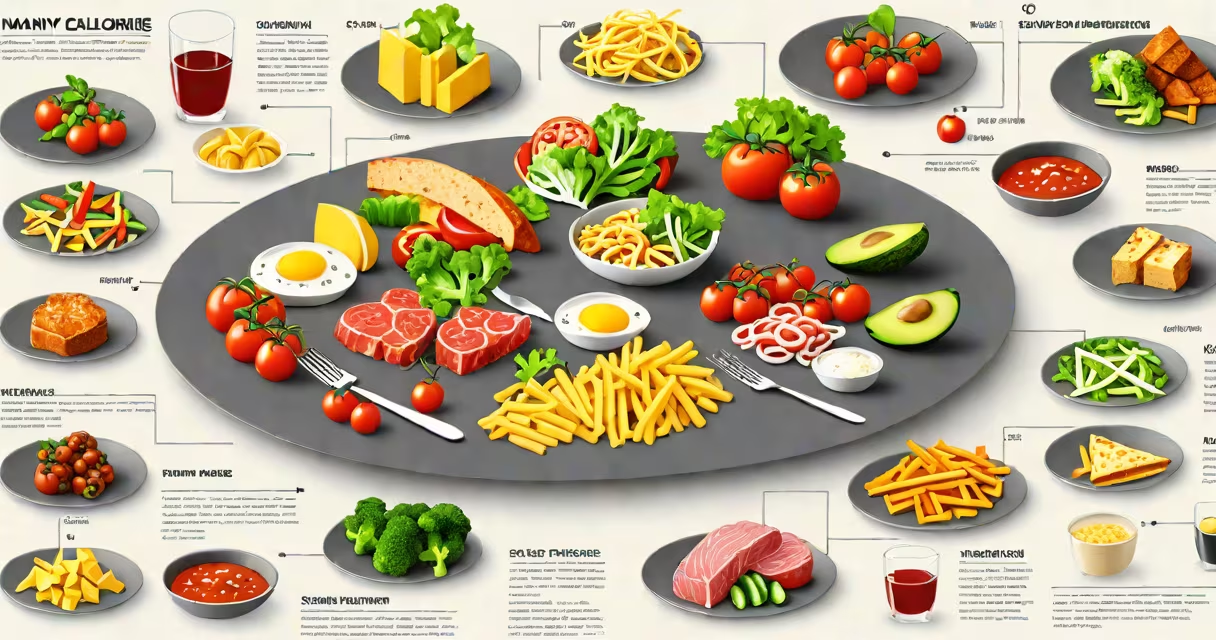
A balanced meal should contain 300-500 calories, depending on your total daily energy expenditure (TDEE) and weight goals. This range supports steady energy levels and satiety while aligning with general health guidelines.
Calorie needs vary by individual factors like age, sex, activity level, and metabolism. The U.S. Dietary Guidelines suggest most adults need 1,600-3,000 calories daily, split across 3-5 meals. For example, a moderately active 30-year-old woman might aim for 450 calories per meal if eating five times a day.
Meal calorie targets fall into three broad categories:
A common mistake is assuming all meals must be equal in calories. In reality, dinner often contains more calories than lunch or breakfast due to higher energy demands later in the day.
Portion control prevents overeating and ensures nutrient balance. Research from the National Institutes of Health shows that consistent calorie tracking leads to better weight management. For instance, a 200-calorie breakfast of Greek yogurt with berries provides protein and fiber, while a 500-calorie dinner of grilled chicken with quinoa and vegetables offers sustained energy.
Many assume skipping meals saves calories, but this often backfires by increasing hunger hormones. Another myth is that all calories are equal-processing and nutrient density matter. A 200-calorie apple has more health benefits than a 200-calorie candy bar.
I once tracked my meals for a month and found that my 400-calorie lunches kept me full longer than 300-calorie ones, likely due to higher protein and fiber content. This experiment reinforced the importance of quality over quantity.
Divide your daily calorie goal by the number of meals you eat. For example, if you need 2,000 calories daily and eat four meals, each should contain about 500 calories. Adjust based on hunger cues and activity levels.
Most people benefit from slightly larger dinners (500-600 calories) and smaller breakfasts (300-400 calories), but individual preferences vary. The key is consistency and balance.