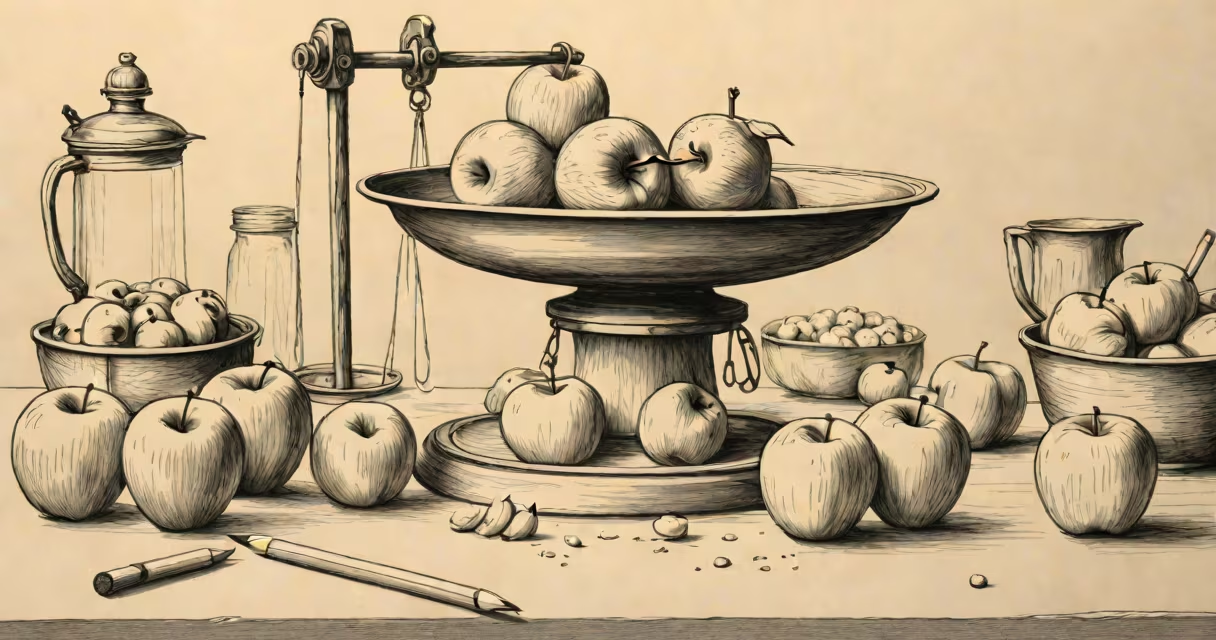
"How much" refers to measuring continuous quantities, while "how many" counts discrete items. The distinction matters in math, science, and everyday life.
"How many" applies to countable objects, like apples or cars. You can't have half an apple in this context-it's either one apple or multiple. "How much" describes uncountable substances, like water or sugar, measured in units like liters or grams.
The key difference lies in whether the subject can be divided into separate parts:
| Type | Example | Measurement |
|---|---|---|
| Countable (How Many) | Apples | Number of apples |
| Uncountable (How Much) | Water | Liters of water |
People often confuse "how much" and "how many" when dealing with collective nouns or abstract concepts. For instance, "how much time" is correct because time is uncountable, but "how many people" is accurate because people are countable.
Understanding the difference is important in data collection. For example, a survey might ask "how many respondents" (countable) but "how much revenue" (uncountable). Misusing these terms can lead to errors in analysis.
I once saw a bakery use "how much bread" instead of "how many loaves," causing confusion among customers. Clarifying the distinction helped simplify their ordering process.
Use "how many" for items you can count individually, like books or chairs. Use "how much" for quantities you measure, like flour or distance. For example:
According to the Grammarly Blog, mixing these up can make your writing unclear. The English Page notes that non-native speakers often struggle with this distinction.