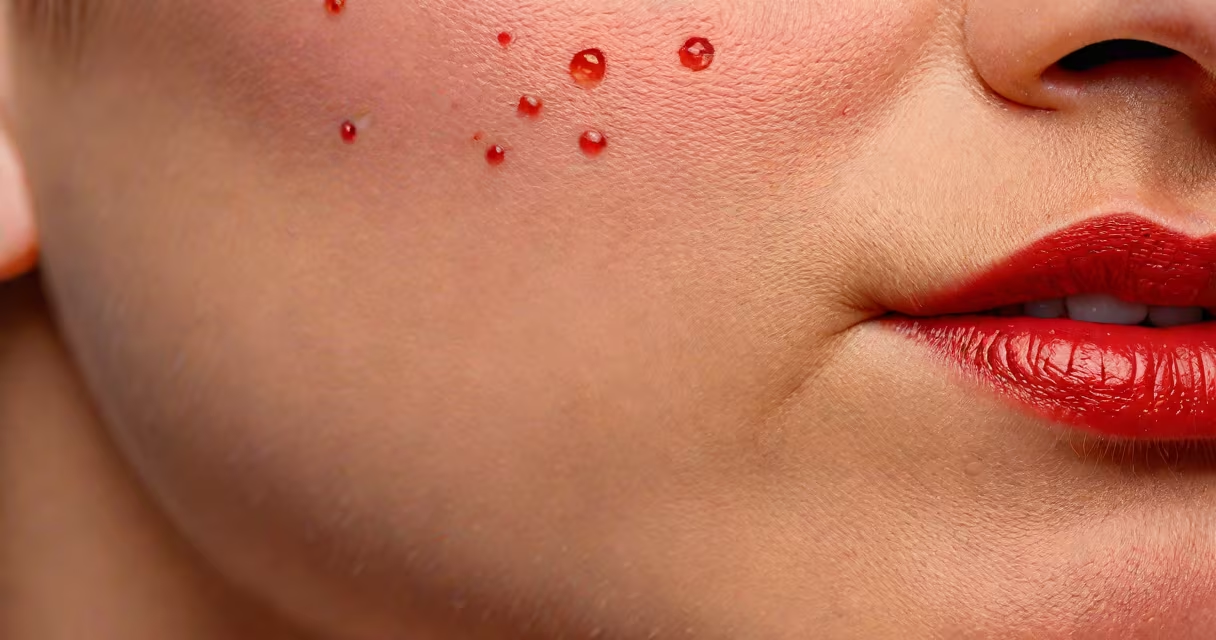
Staph infections on the face appear as painful red bumps or pustules caused by Staphylococcus bacteria. Treatment requires medical intervention and strict hygiene.
Staphylococcus bacteria live harmlessly on most people's skin and nasal passages. Infections occur when bacteria enter through cuts, scrapes, or hair follicles. On the face, they often start as small red bumps that quickly turn into painful pustules filled with pus.
| Type | Appearance | Severity |
|---|---|---|
| Folliculitis | Small red bumps around hair follicles | Mild |
| Furuncles (boils) | Large, painful pus-filled nodules | Moderate |
| Carbuncles | Cluster of boils under connected hair follicles | Severe |
| Cellulitis | Red swollen area with no clear border | Severe |
Topical antibiotics like mupirocin (Bactroban) treat mild infections. Severe cases require oral antibiotics such as cephalexin or doxycycline. For MRSA (methicillin-resistant Staphylococcus aureus), doctors prescribe stronger antibiotics like clindamycin or trimethoprim-sulfamethoxazole.
Never attempt to pop or squeeze facial staph infections. This spreads bacteria and increases scarring risk. Cover infected areas with clean gauze to prevent contact.
Wash face gently twice daily with mild soap and warm water. Avoid harsh scrubs or exfoliants that may cause microtears. Change pillowcases frequently and avoid touching your face with unwashed hands.
Use a humidifier to keep skin moist and apply fragrance-free moisturizer to prevent cracking. Avoid sharing personal items like razors or makeup brushes.
Consult a doctor if facial staph symptoms persist beyond 48 hours of home care. Seek immediate attention for signs of infection spreading: fever, swelling beyond original area, or worsening pain. Untreated facial staph can lead to serious complications including sepsis.
For persistent or recurring infections, doctors may test for antibiotic-resistant strains. In severe cases, surgical drainage of large abscesses may be necessary.
While treating staph infections, avoid applying acne medications containing benzoyl peroxide or salicylic acid, which can irritate infected skin. Focus on keeping the area clean and protected until medical treatment resolves the infection.