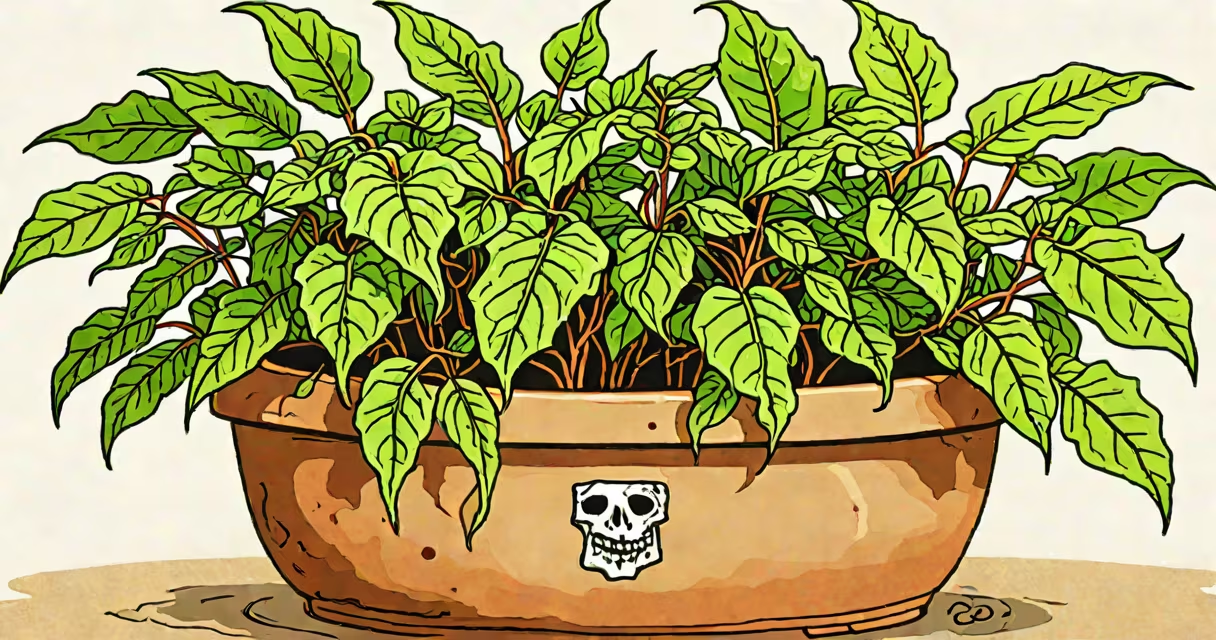
Happy ghast is a hardy houseplant with glossy green leaves that thrives in low-light conditions. Native to tropical regions, it requires minimal care and is ideal for beginners.
The happy ghast (Scindapsus pictus) is part of the Araceae family. It's often confused with pothos due to similar leaf shapes, but happy ghast leaves have distinctive silver variegation. This plant grows as a vine, making it perfect for hanging baskets or training along trellises.
Happy ghast plants need bright, indirect light but can tolerate low-light environments. They prefer well-draining soil and moderate humidity. Water them when the top inch of soil feels dry, typically every 1-2 weeks.
Select a pot with drainage holes to prevent root rot. Terracotta pots work well because they allow excess moisture to evaporate.
Use a well-draining potting mix, such as a combination of peat moss, perlite, and vermiculite. Avoid heavy soils that retain too much water.
Place the happy ghast in the pot, ensuring the crown sits slightly above the soil line. Fill around the roots with soil and gently press down to secure the plant.
Water thoroughly until it drains from the bottom of the pot. Let the soil dry out between waterings to avoid overwatering.
Place the plant in a spot with bright, indirect light. If the air is dry, mist the leaves occasionally or use a humidifier.
Overwatering is the most common issue, leading to yellow leaves and root rot. Ensure the pot has proper drainage and only water when the soil is dry., avoid placing the plant in direct sunlight, which can scorch the leaves.
For more tips on growing resilient plants, see our guide on cultivating asparagus.
Growing happy ghast is straightforward with the right care. By providing proper light, soil, and watering, you'll enjoy a thriving, low-maintenance plant that adds beauty to any space.