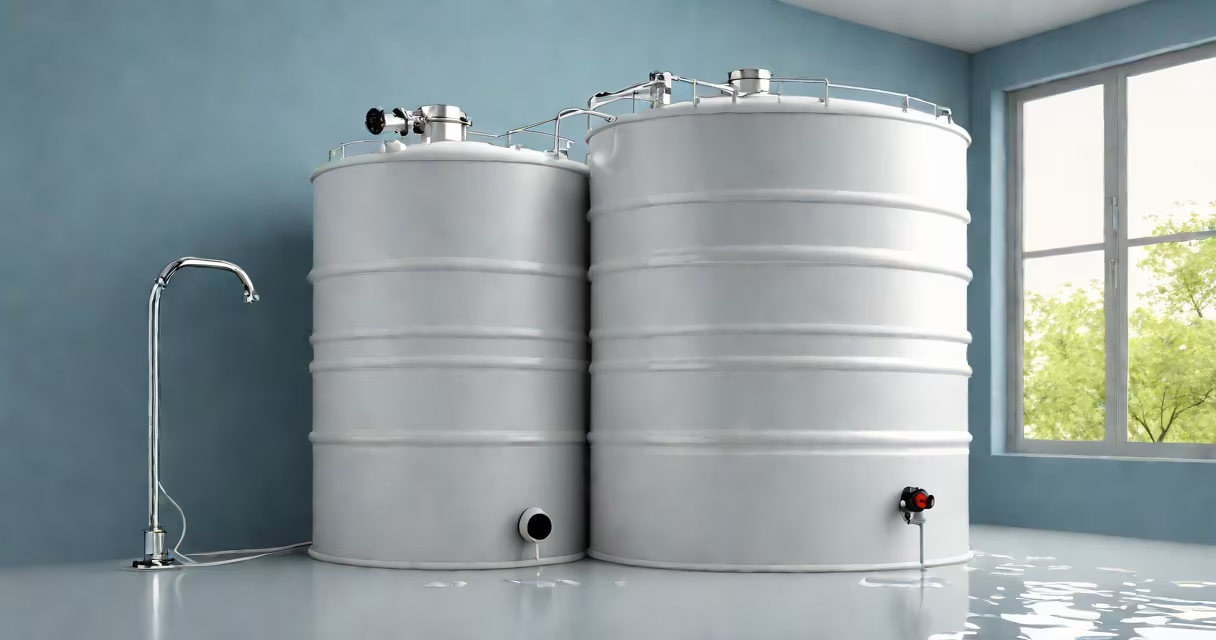
A leaking plastic water tank requires sealing the breach with an appropriate adhesive or patch, then testing for leaks. Common fixes include using waterproof epoxy, silicone sealant, or a rubber patch.
Plastic water tanks typically leak due to cracks, punctures, or faulty seals around fittings. Cracks often develop from physical impacts or prolonged exposure to sunlight, which weakens the plastic. Punctures can occur from sharp objects, while faulty seals around inlet/outlet pipes or valves may degrade over time.
The repair method depends on the leak's location and size. Small cracks or punctures can often be sealed with waterproof adhesives, while larger breaches may require patches. Seals around fittings usually need resealing with silicone or plumber's tape.
| Leak Type | Repair Method | Materials Needed |
|---|---|---|
| Small crack (<1 inch) | Waterproof epoxy | Epoxy resin, mixing tools |
| Puncture (any size) | Rubber patch | Rubber patch kit, scissors |
| Faulty fitting seal | Silicone sealant or plumber's tape | Silicone sealant, plumber's tape |
First, empty the tank completely and clean the area around the leak with isopropyl alcohol. For small cracks, apply waterproof epoxy according to the manufacturer's instructions, ensuring full coverage. For punctures, cut a rubber patch slightly larger than the hole and adhere it using the kit's adhesive. For faulty seals, remove old sealant, apply new silicone sealant or wrap the fitting with plumber's tape.
After repairing, refill the tank and monitor for leaks. If the leak persists, the tank may need replacement. According to the Home Depot, plastic water tanks typically last 10-15 years with proper maintenance.
Many people mistakenly use regular duct tape or super glue for repairs, which won't hold under constant water pressure. Always use materials rated for waterproof applications., failing to clean the area before applying adhesives can prevent proper bonding, leading to further leaks.
I once repaired a leaking plastic water tank using a rubber patch kit. The puncture was about 2 inches wide, and the patch held perfectly after cleaning the area thoroughly. The tank remained leak-free for over two years afterward.
If the tank has multiple leaks, deep structural cracks, or shows signs of excessive wear, replacement may be necessary. Continuing to repair a severely damaged tank can lead to contamination or complete failure. Consult a professional if unsure about the tank's condition.