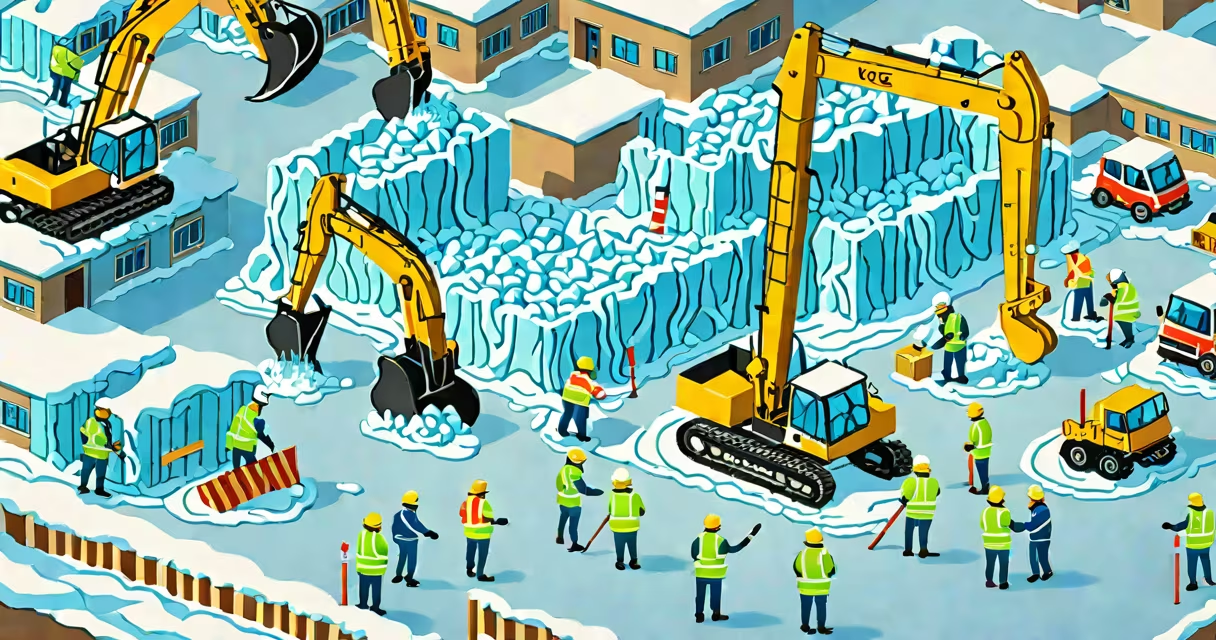
Ice civil engineering uses ice as a structural material or construction aid in cold climates. It includes techniques like artificial ground freezing to stabilize soil during excavation.
Engineers create ice structures by spraying water onto surfaces below freezing temperatures. The water freezes on contact, building layers incrementally. For ground freezing, pipes circulate a coolant like calcium chloride brine to freeze surrounding soil.
Ice engineering has several key applications:
Ice engineering is primarily used in cold climates where traditional construction materials would fail. It's particularly valuable in:
One major advantage is cost-effectiveness. Building with ice is often cheaper than transporting traditional materials to remote locations. For example, oil companies use ice roads to access northern drilling sites during winter months.
Many people confuse ice engineering with simply building on frozen ground. However, artificial ground freezing creates controlled, predictable conditions. Unlike natural permafrost, which can thaw unpredictably, engineered ice structures have precise strength properties.
Another misconception is that ice structures are always temporary. While many are seasonal, some ice engineering techniques create structures that last for years in persistently cold environments.
During World War II, Germany built ice hangars to protect their jet aircraft from Allied bombing. These structures were constructed by spraying water onto wooden frames in sub-zero temperatures. The resulting ice shells were strong enough to withstand bomb blasts while being difficult targets for precision bombing due to their camouflage.
This technique demonstrated how ice engineering could solve critical military needs during wartime resource shortages. The hangars remained functional throughout the winter of 1944-45, proving the effectiveness of large-scale ice construction.