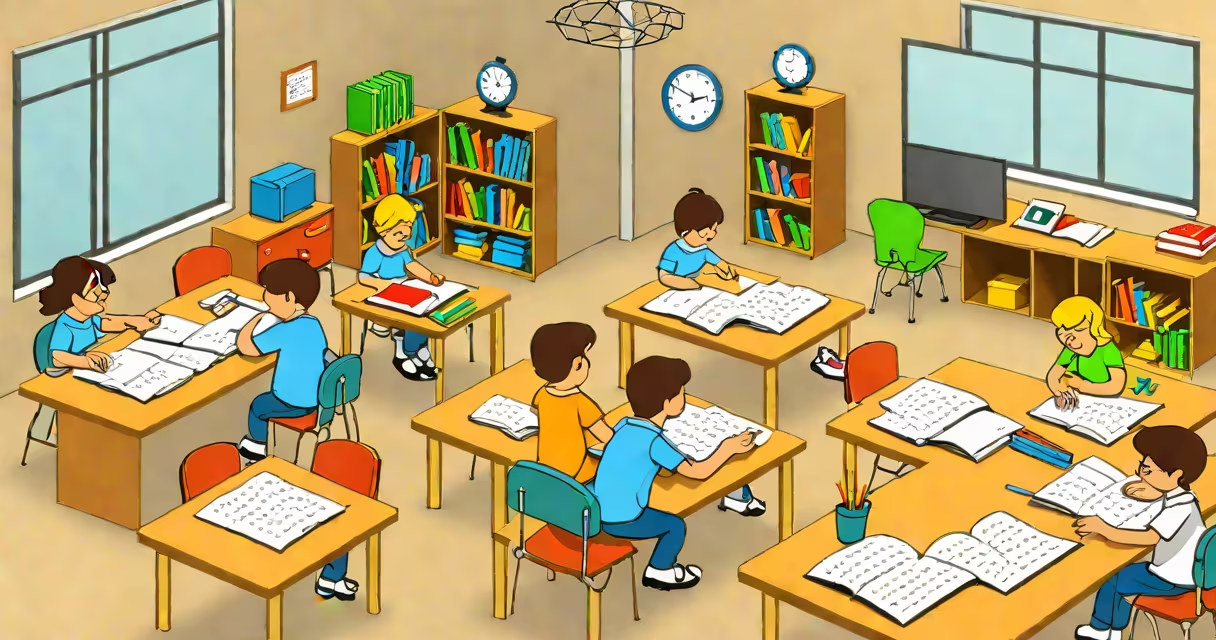
IEP goals for kindergarten reading are specific, measurable objectives in an Individualized Education Program (IEP) designed to improve a child's reading skills through targeted instruction. These goals focus on foundational skills like phonemic awareness, phonics, vocabulary, and comprehension.
An IEP team-including teachers, parents, and specialists-creates personalized goals based on a child's current reading level and areas of difficulty. Goals are broken into smaller, actionable steps with clear benchmarks to track progress. For example, a goal might require a child to correctly identify 10 out of 12 letter sounds in a given timeframe.
The IEP outlines how often the child will receive instruction, who will provide it, and how progress will be measured. Teachers use assessments like running records or phonics screenings to evaluate improvement. Adjustments are made if a child isn't meeting expectations.
Kindergarten reading goals typically fall into four categories:
Early reading skills are critical because they form the foundation for all future learning. According to the National Reading Panel, children who struggle with reading in kindergarten are at higher risk of long-term reading difficulties. IEP goals ensure these students receive structured support to catch up to their peers.
A common mistake is assuming that all kindergarteners develop reading skills at the same pace. While some children learn to read easily, others need explicit instruction and extra practice. IEP goals address these differences by tailoring support to individual needs.
Some parents believe IEP goals for reading are only for children with severe disabilities. However, many kindergarteners benefit from IEPs due to mild delays, such as trouble recognizing rhyming words or sounding out vowels. Others confuse IEP goals with general classroom objectives. Unlike broad goals, IEP targets are legally binding and require regular progress reports.
For example, a kindergartener might struggle with blending sounds. Their IEP goal could specify that they will correctly blend 8 out of 10 consonant-vowel-consonant (CVC) words in a month. The teacher would track progress weekly and adjust instruction if needed.
When working with a kindergarten class, I noticed one student consistently guessed words instead of sounding them out. We added a phonics-based IEP goal to her plan, focusing on decoding short vowel words. After three months of targeted practice, she improved from recognizing 3 out of 10 words to 8 out of 10.