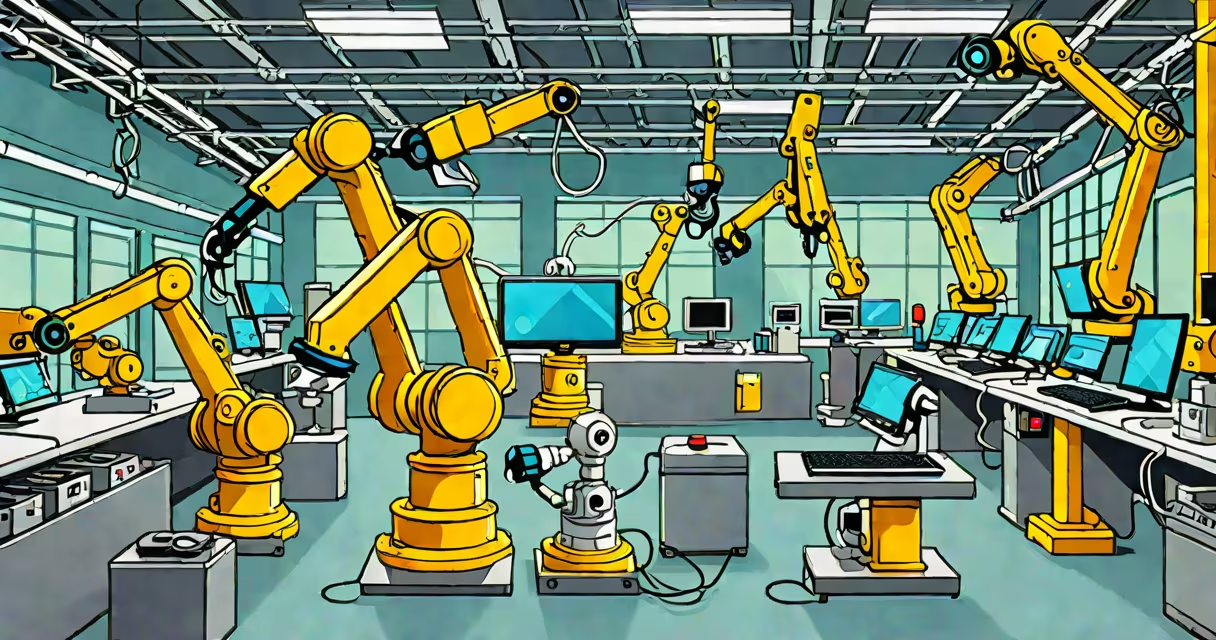
Industrial AI solutions are specialized applications of artificial intelligence designed to improve efficiency, safety, and productivity in manufacturing and production environments. These systems use machine learning algorithms to analyze data from sensors, cameras, and other IoT devices to automate processes, predict equipment failures, and improve quality control.
Most industrial AI solutions rely on a combination of computer vision, natural language processing, and predictive analytics. Sensors embedded in machinery collect data on performance metrics like temperature, vibration, and pressure. This data is then processed by AI algorithms to identify patterns and anomalies that indicate potential issues before they cause downtime.
For example, an AI system might analyze vibration data from a motor to detect early signs of bearing wear. By comparing current readings against historical data, the algorithm can predict when maintenance is needed, allowing operators to schedule repairs during planned downtime rather than responding to unexpected breakdowns.
| Application | Key Features | Example Use Case |
|---|---|---|
| Predictive Maintenance | Monitors equipment health using sensor data | Detecting bearing failure in a conveyor belt system |
| Quality Control | Uses computer vision to inspect products | Identifying defects in automotive parts |
| Process Optimization | Adjusts parameters in real-time for efficiency | Optimizing chemical reactions in a refinery |
| Inventory Management | Tracks stock levels and predicts demand | Managing spare parts inventory for aircraft maintenance |
Industrial AI solutions are deployed across various sectors, including automotive manufacturing, food processing, pharmaceuticals, and oil and gas. In the automotive industry, for instance, AI-powered robots assemble vehicles with precision, while in food processing, computer vision systems ensure that packaged goods meet strict quality standards.
A common misconception is that industrial AI replaces human workers entirely. In reality, these systems augment human capabilities by handling repetitive tasks, allowing workers to focus on more complex decision-making. For example, in a semiconductor fabrication plant, AI might control the environment in clean rooms, ensuring optimal conditions for production while human technicians oversee the process.
As AI technologies continue to evolve, industrial applications will become even more sophisticated. Advances in edge computing, for instance, will enable AI systems to process data locally, reducing latency and improving real-time decision-making., the integration of AI with augmented reality (AR) will allow workers to access real-time guidance and troubleshooting information directly in their field of view.
One non-obvious trend is the growing use of AI in sustainability efforts. By optimizing energy consumption and reducing waste, industrial AI solutions contribute to greener manufacturing practices. For example, an AI system might adjust the operation of HVAC systems in a factory to minimize energy use while maintaining worker comfort.
I've seen this firsthand in a steel mill where an AI system reduced energy consumption by 15% by optimizing the heating process in furnaces. The system learned from historical data to adjust temperatures more precisely, resulting in significant cost savings and reduced carbon emissions.