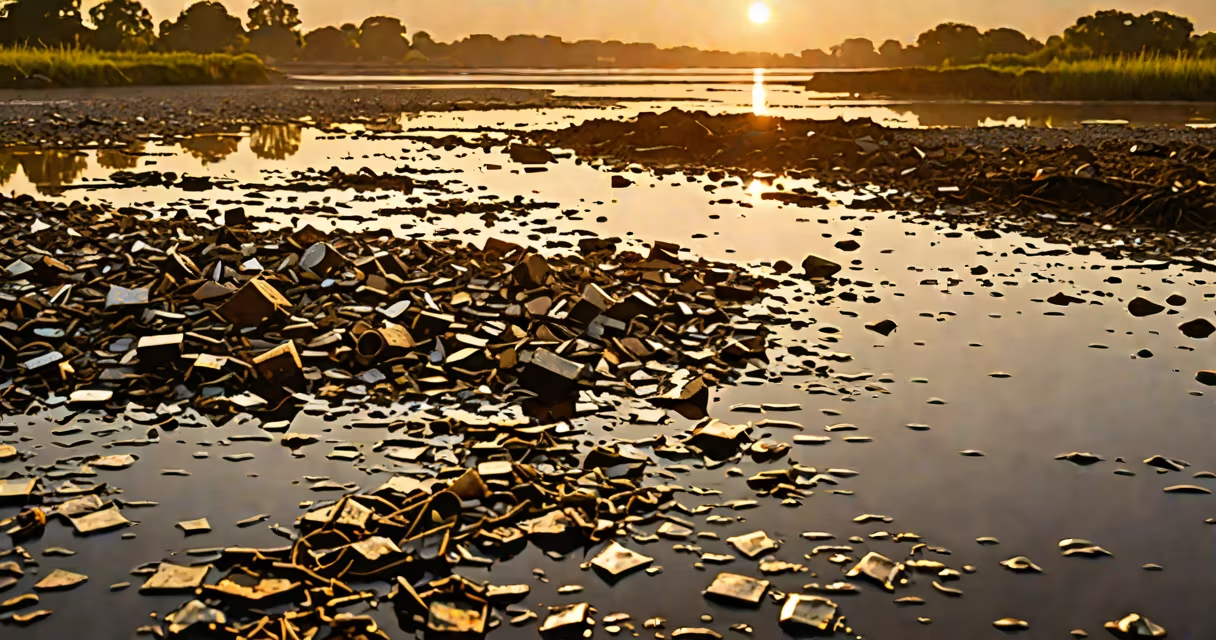
Industries and water pollution describes how manufacturing plants, chemical factories, and other businesses release toxic substances into rivers, lakes, and oceans. This contamination harms aquatic life and human health through direct contact or drinking water supplies.
Factories discharge pollutants directly into water bodies through pipes or indirectly via runoff. Common sources include:
For example, the Ganges River in India receives over 2 billion liters of untreated sewage and industrial waste daily, according to the Central Pollution Control Board.
| Pollutant Type | Examples | Sources |
|---|---|---|
| Heavy Metals | Lead, mercury, cadmium | Mining, electronics manufacturing |
| Organic Chemicals | Pesticides, solvents | Pharmaceuticals, textiles |
| Nutrients | Nitrogen, phosphorus | Fertilizer production, food processing |
| Pathogens | Bacteria, viruses | Slaughterhouses, food factories |
A 2020 study in Environmental Science & Technology found that mercury levels in fish from industrial areas exceeded safe limits by 300%.
Contaminated water causes diseases like cholera, dysentery, and cancer. The World Health Organization estimates that 829,000 people die annually from diarrhea due to unsafe drinking water.
Industrial pollutants also accumulate in fish and other seafood, entering the food chain. For instance, mercury poisoning from eating contaminated fish affects the nervous system, causing cognitive impairment and developmental delays in children.
Many assume that water treatment plants remove all industrial pollutants. However, some chemicals persist even after treatment. For example, perfluoroalkyl substances (PFAS), known as "forever chemicals," resist breakdown and accumulate in the environment.
Another myth is that small-scale industries cause minimal harm. Yet, cumulative pollution from numerous small factories can exceed damage from larger ones. A 2019 report by the United Nations Environment Programme found that small and medium-sized enterprises contribute to water pollution in developing countries.
Governments enforce regulations like the U.S. Clean Water Act and the European Union's Water Structure Directive to limit industrial discharges. Factories must treat wastewater before release and report pollution levels regularly.
Technological solutions include advanced filtration systems and closed-loop water recycling. For example, the United Nations Environment Programme promotes wastewater reuse in industries to reduce contamination.
While researching this topic, I visited a river restoration project in Ohio. Workers installed biofilters to capture pollutants from a nearby factory's runoff. The filters reduced heavy metal levels by 60% within six months, showing that targeted solutions can mitigate industrial water pollution effectively.