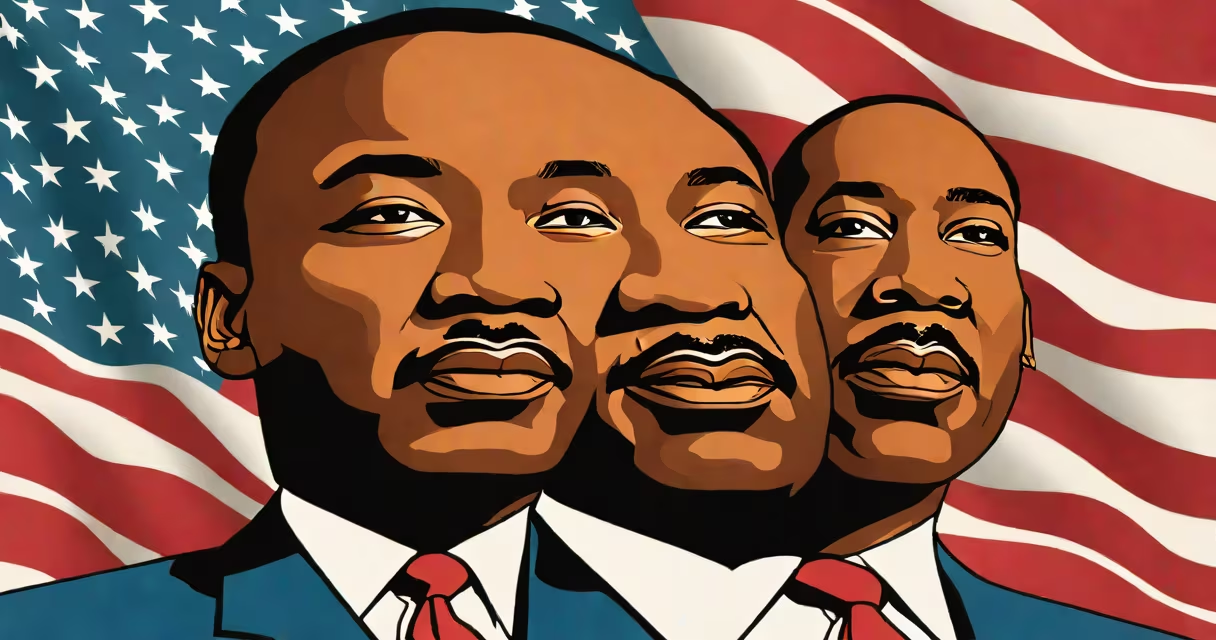
After King's assassination in 1968, calls for a national holiday in his honor began. Congressman John Conyers introduced legislation for the holiday four days later. However, it took 15 years of advocacy before President Ronald Reagan signed the bill into law in 1983. The first official observance was in 1986.
Not all states initially recognized the holiday. By 2000, all 50 states had adopted it, though some originally combined it with existing holidays or called it by different names.
Federal offices, banks, and many businesses close. Some schools hold special programs or community service events. The Martin Luther King Jr. Memorial in Washington, D.C., and other landmarks host ceremonies.
One unique tradition is the annual wreath-laying ceremony at King's gravesite in Atlanta, Georgia. Another is the MLK Day of Service, encouraging Americans to volunteer in their communities.
Some people confuse Martin Luther King Day with other holidays or assume it's only for certain groups. In reality, it's a national observance recognizing King's contributions to all Americans.
Another myth is that the holiday is optional for states. While states can name their holidays differently, they still must observe it as a paid day off for federal employees.
I visited the National Civil Rights Museum in Memphis, Tennessee, which includes exhibits on King's legacy. Seeing the bus where he was arrested during the Montgomery Bus Boycott drove home the holiday's significance beyond just a day off.
Martin Luther King Day serves as both a remembrance and a call to action. It reminds Americans of the ongoing struggle for equality and encourages participation in civic life. According to the Martin Luther King Jr. National Historical Park, over 1 million people participate in service projects annually on this day.
The holiday also highlights King's relevance in modern movements for social justice. As society continues to grapple with issues like police brutality and voting rights, his work remains a guiding force.