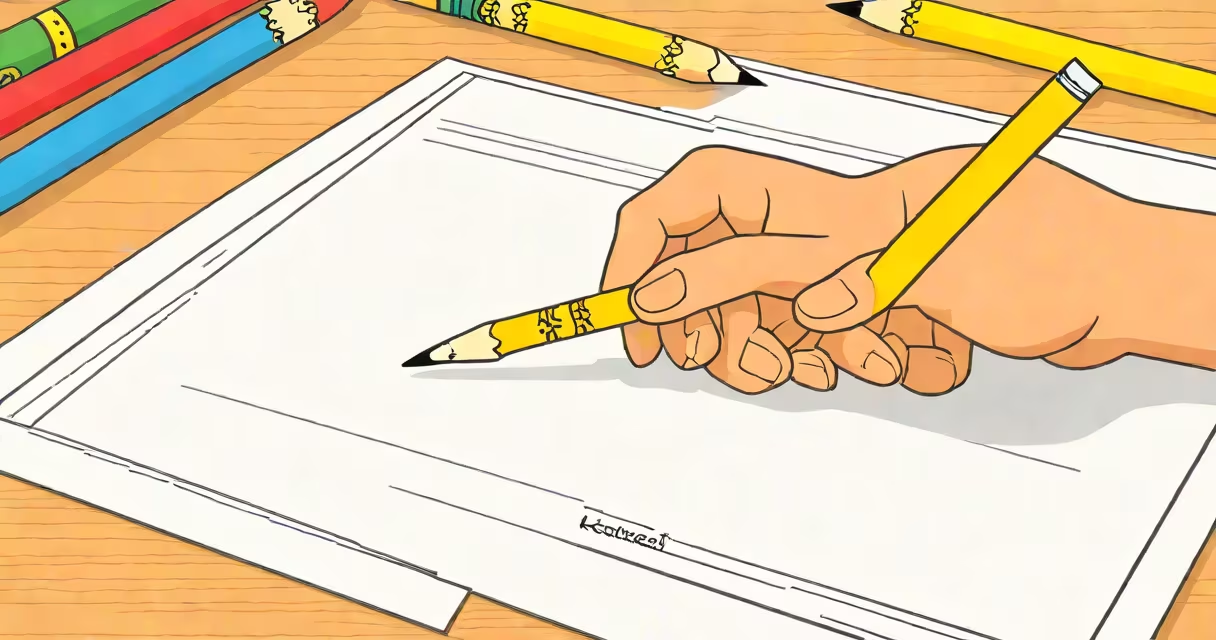
Kindergarten sentences to write are short, simple phrases designed to help young children practice basic writing skills. These exercises typically focus on proper letter formation, spacing between words, and capitalization.
Most kindergarten writing activities follow a similar structure. Teachers provide students with a word bank or picture cues to help them form complete thoughts. Children then copy or dictate sentences onto lined paper, focusing on neatness and accuracy.
For example, a teacher might give students the words "The cat sat" and ask them to write the phrase on their paper. This helps children understand how individual words combine to create meaning.
| Type | Description | Example |
|---|---|---|
| Copywork | Children copy sentences written by the teacher | "The sun is bright." |
| Dictation | Teacher says a sentence aloud for children to write | "I see a bird." |
| Fill-in-the-Blank | Children complete sentences with missing words | "I like to eat ______." |
Research shows that early writing practice correlates with improved reading comprehension and vocabulary development. According to the National Institute for Literacy, children who practice writing regularly demonstrate stronger language skills.
Some parents assume that kindergarten writing should focus solely on creativity. While imaginative play is important, structured writing exercises build foundational skills that creative writing builds upon. The National Association for the Education of Young Children recommends a balance of both approaches.
Another mistake is expecting perfection too soon. Kindergarten writing often includes invented spelling, where children use letters and sounds they know to represent words. For example, a child might write "I sed a cat" instead of "I saw a cat." This is a normal part of early literacy development.
When I taught kindergarten, I noticed that children who practiced writing daily showed noticeable improvement in their ability to form complete thoughts. One student who initially wrote only single words progressed to writing full sentences like "I went to the park" within a few months of consistent practice.