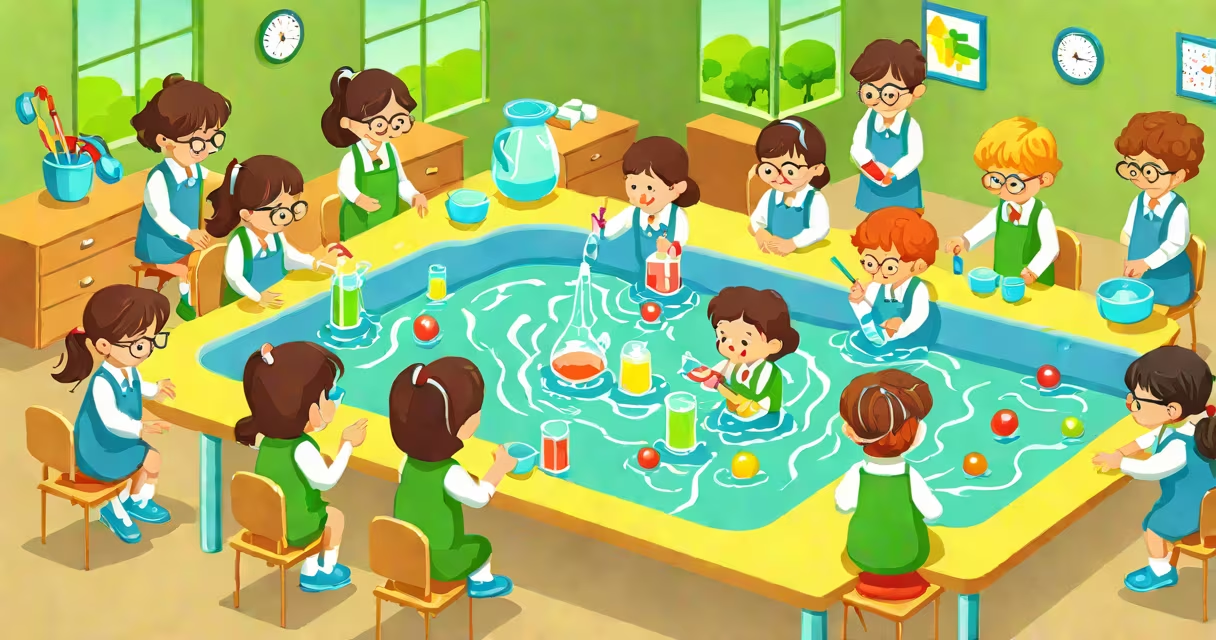
A scientist in kindergarten is a young learner who explores the natural world using simple observations, questions, and experiments. This introduction to science builds curiosity and basic investigative skills.
At this age, science is about hands-on discovery. Children observe, ask questions, and test ideas through play. A classic example is the sink-or-float experiment: kids drop objects in water to see which ones sink and which float, then guess why.
Kindergarten science includes four key areas:
Early science exposure fosters critical thinking and problem-solving. The National Research Council emphasizes that young children develop foundational science skills through exploration. For example, a teacher might ask, "What happens if we add ice to warm water?" to introduce cause-and-effect relationships.
Many parents and teachers confuse kindergarten science with formal lessons. Instead, it's about guided play. The goal isn't memorizing facts but developing curiosity. A common mistake is assuming young children can't grasp scientific concepts-they absolutely can, just in simpler forms.
Take a classroom experiment: "Will a balloon fly if we blow it up?" Kids predict, test, and discuss results. This mirrors real science: asking questions, testing ideas, and sharing findings. The key difference is scale-kindergarteners use everyday objects like balloons or leaves instead of lab equipment.
I once watched a kindergartener test whether different fruits sink or float. She carefully placed each one in water, recorded results, and proudly announced her conclusions. That's real science in action.
Many assume kindergarten science is too simple to matter. In reality, it builds essential skills. The National Science Teaching Association notes that early exposure helps children develop a love for learning. Another myth is that science requires advanced tools-kindergarteners use household items like magnifying glasses or plastic containers.
Some think science is separate from other subjects. But it connects to everything: reading about plants, counting seeds, or measuring water. Integrating science into daily routines makes learning smooth.