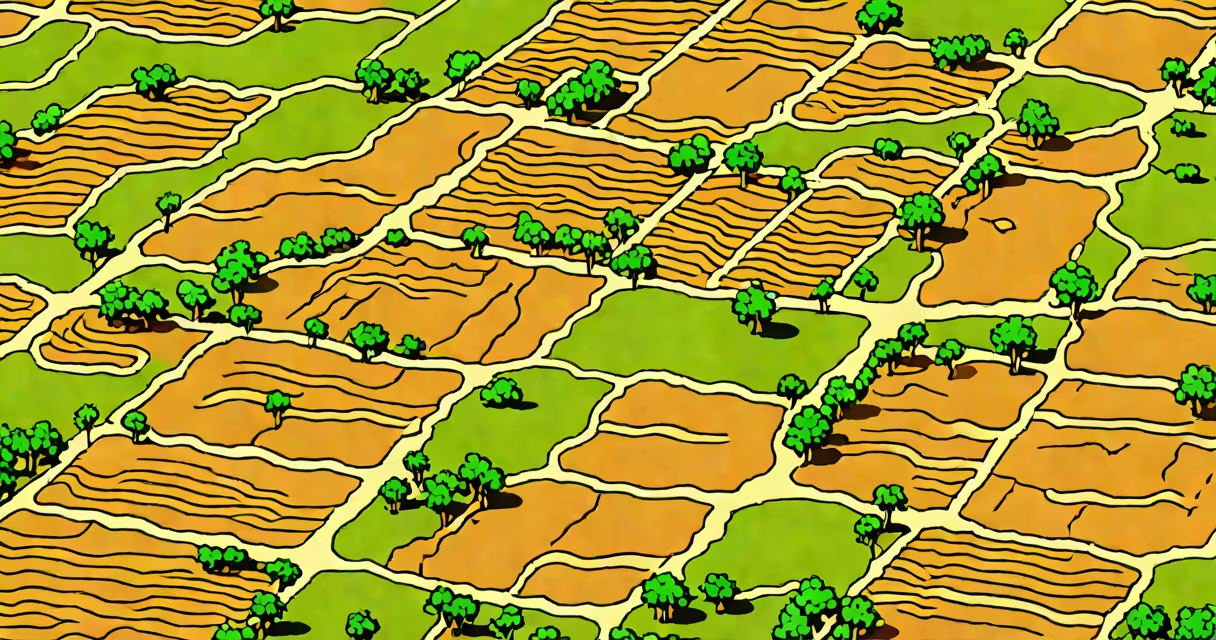
Land degradation and development describes how human activities degrade land while exploring ways to restore and sustainably develop affected areas. This process threatens 75% of Earth's ice-free land, according to the IPCC.
Land degradation occurs when natural processes or human activities reduce the productivity of land. Common causes include:
| Type | Description | Example |
|---|---|---|
| Soil erosion | Topsoil loss due to wind or water | Midwestern U.S. Dust Bowl (1930s) |
| Salinization | Salt buildup in soil from irrigation | Australia's Murray-Darling Basin |
| Desertification | td>Dryland degradation from drought or human activitySub-Saharan Africa | |
| Contamination | Chemical or radioactive pollution | Love Canal, New York |
To combat land degradation, sustainable development practices focus on restoring land productivity while supporting economic growth. Effective strategies include:
Many people confuse land degradation with natural processes like weathering or erosion. However, land degradation specifically refers to human-induced damage that reduces land productivity. For example, while rivers naturally erode banks, human activities like deforestation accelerate this process, leading to degradation.
Another misconception is that degraded land cannot support development. In reality, restored land can be more productive than before. For instance, the Loess Plateau in China, once severely degraded, now supports thriving agriculture and forestry thanks to restoration efforts.
In the 1930s, the Dust Bowl in the U.S. turned productive farmland into a wasteland due to poor agricultural practices. Through the Soil Bank Program, farmers implemented soil conservation techniques like contour plowing and terracing. By 1980, the region had recovered, demonstrating how effective land management can reverse degradation.
Land degradation and development highlights the urgent need for sustainable practices to protect our planet's finite resources. By understanding the causes and implementing restoration strategies, we can ensure land remains productive for future generations.