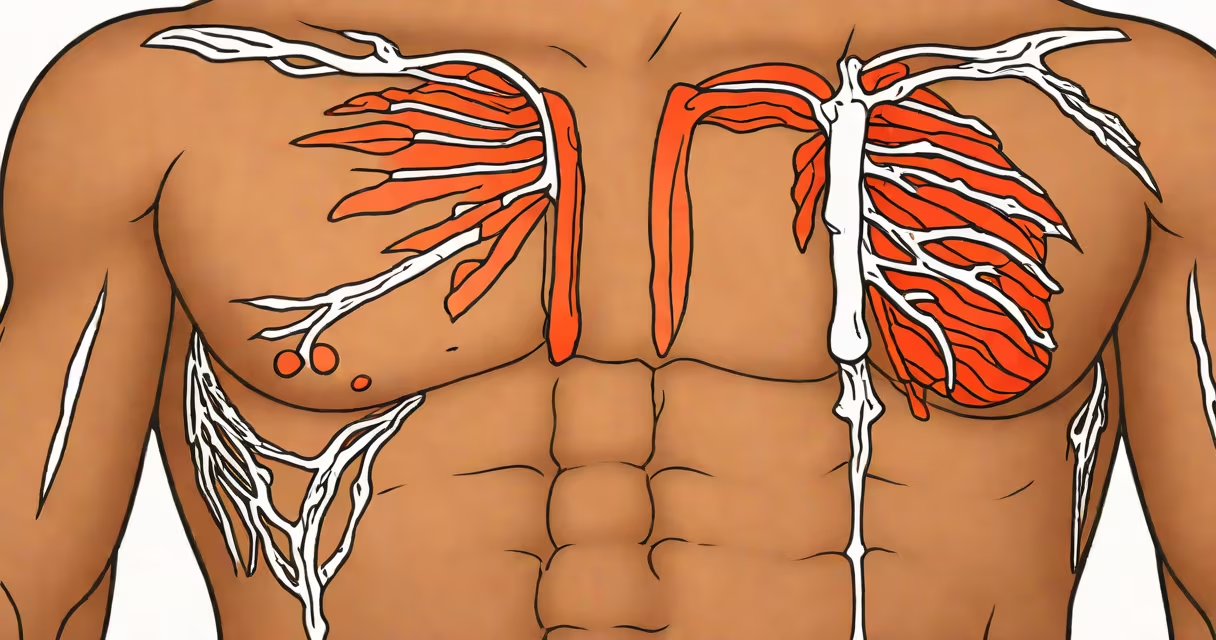
A left pectoral muscle spasm is a sudden, involuntary contraction of the pectoralis major or minor muscles in the chest, causing sharp pain and tightness. These spasms often feel like a cramp or charley horse but occur in the chest rather than the leg.
The pectoral muscles help move and stabilize the shoulder joint. A spasm occurs when these muscles contract suddenly and involuntarily, often due to overuse, strain, or dehydration. The spasm can last from a few seconds to several minutes, causing significant discomfort.
Spasms in the left pectoral muscle can be categorized based on their cause:
| Type | Cause | Duration |
|---|---|---|
| Exercise-induced | Overuse during physical activity | Seconds to minutes |
| Stress-related | Muscle tension from stress | Minutes to hours |
| Dehydration-related | Lack of electrolytes | Minutes to hours |
Left pectoral muscle spasms are common among athletes, especially those involved in sports requiring repetitive arm movements, such as swimming or weightlifting. They can also occur in individuals who experience high levels of stress or anxiety, as muscle tension is a common response to psychological stress.
Many people confuse a left pectoral muscle spasm with heart-related issues due to the location of the pain. However, muscle spasms are typically localized to one area and may be accompanied by visible muscle twitching. Heart-related pain, however, often radiates to other parts of the body and may be accompanied by shortness of breath or dizziness.
Consider an example of a swimmer experiencing a left pectoral muscle spasm. During a intense training session, the swimmer notices a sudden, sharp pain in the left chest muscle. The pain lasts for about a minute and is accompanied by a visible twitching of the muscle. The swimmer rests, hydrates, and gently stretches the muscle, which relieves the spasm. This scenario illustrates a typical exercise-induced spasm.